Q&A with April Ambrose: All About Advanced Energy Apprenticeships
Why should someone consider becoming an apprentice?
Unlike traditional education, apprentices are hired first and then paid to learn through a combination of structured on-the-job training and related classroom instruction. Individuals earn a paycheck while developing in-demand skills, receiving mentorship, progressing through scheduled wage increases, and achieving nationally recognized credentials with little to no educational debt.
How much does it cost to be an apprentice?
Training, travel to training, credentialing and other expenses can range from $1,000 to $20,000; however, there is rarely a cost to the apprentice.
Why should employers offer apprenticeship opportunities?
It provides a codified training pathway that makes program structure and development easy. For industries without widely accepted credentials, the apprenticeship certificate provides proof of skills attained. There is a state tax credit as well.
Employers build a workforce trained to their exact needs while improving retention, productivity, and safety and reducing recruitment and training costs. At the industry level, apprenticeships expand access to high-quality careers, create equitable pathways into the workforce, strengthen the pipeline of skilled talent, and support long-term economic growth, innovation, and a more resilient energy workforce capable of meeting the growing demand for advanced energy professionals.
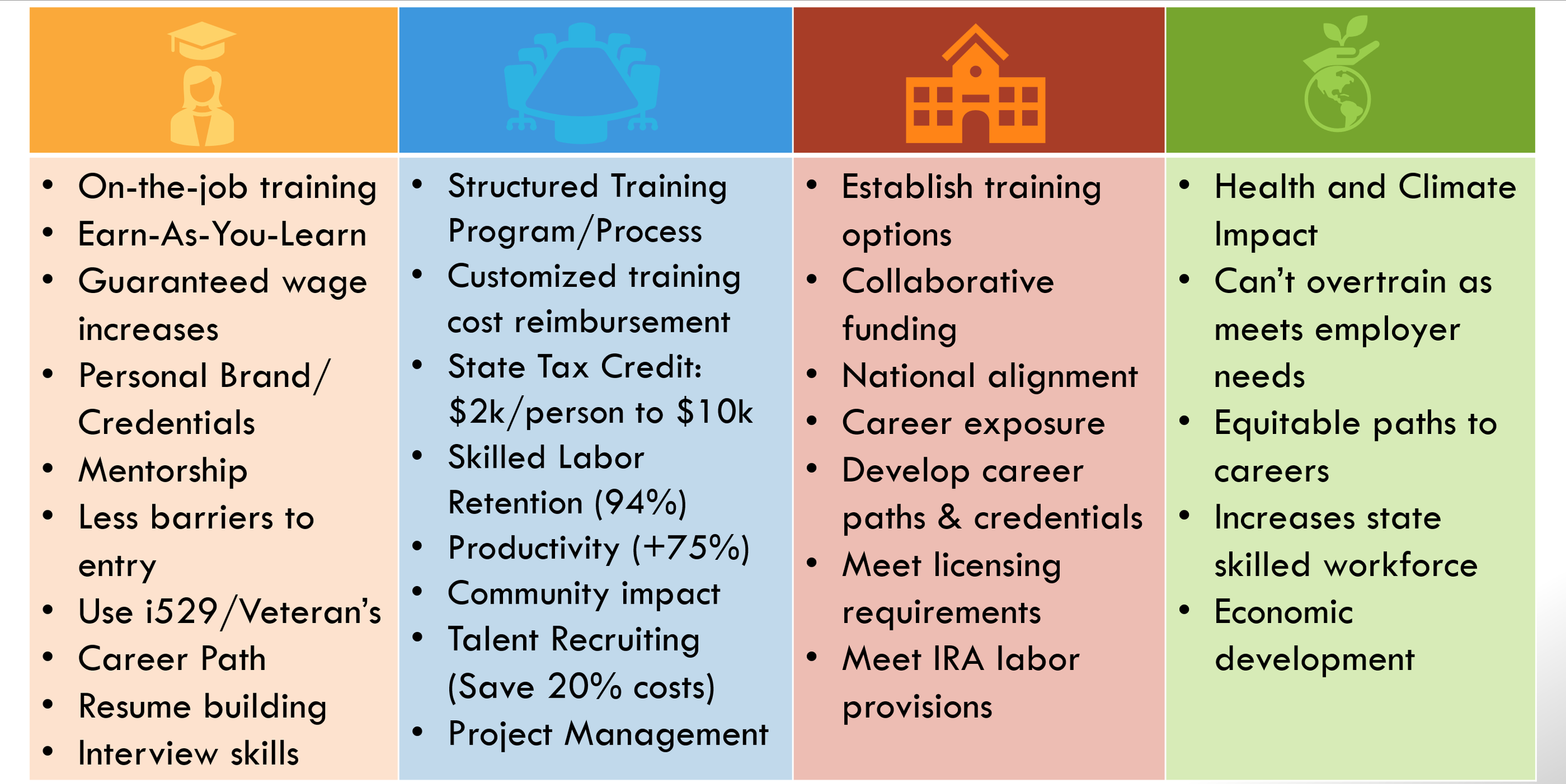
Apprenticeship benefits as outlined by Apprenticely. Resume building, interview skills, talent recruiting, and project management are unique to what Apprenticely can provide.
How is apprenticeship different from traditional training?
Traditional education and community college programs provide valuable technical knowledge, but apprenticeships integrate that education directly with full-time employment. Rather than completing training first and then searching for a job (the “train-and-pray” model), apprentices are hired from day one, earn wages throughout their training, receive structured on-the-job learning from experienced mentors, and apply classroom instruction immediately in real-world settings. Since businesses hire first and then train, they certainly won’t over-train as some training institutions can do when out of touch with the market needs. In many cases, the related classroom instruction can be completed through a community college or other approved training provider, allowing participants to earn both practical experience and formal education simultaneously. This "earn-and-learn" approach helps individuals enter the workforce sooner while giving employers confidence that training is aligned with their specific equipment, processes, and workforce needs.
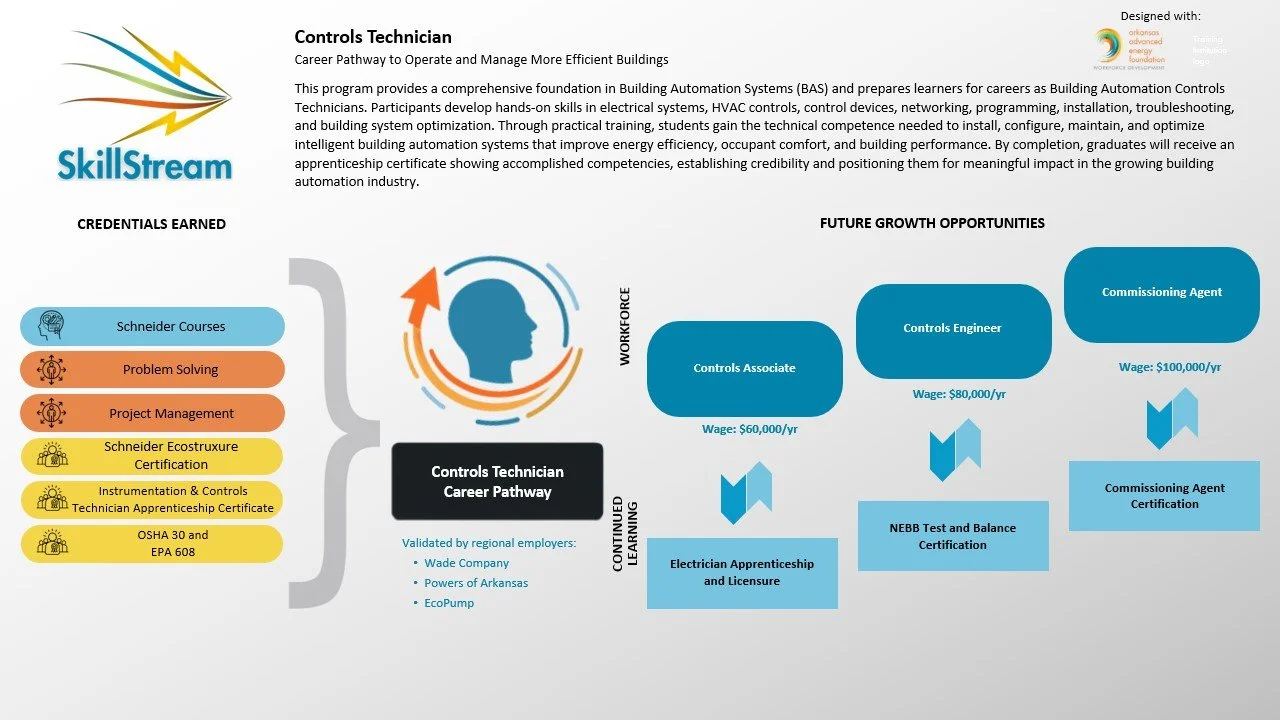
Example of a career pathway that starts with apprenticeship.
Why do we need more apprentices in Arkansas?
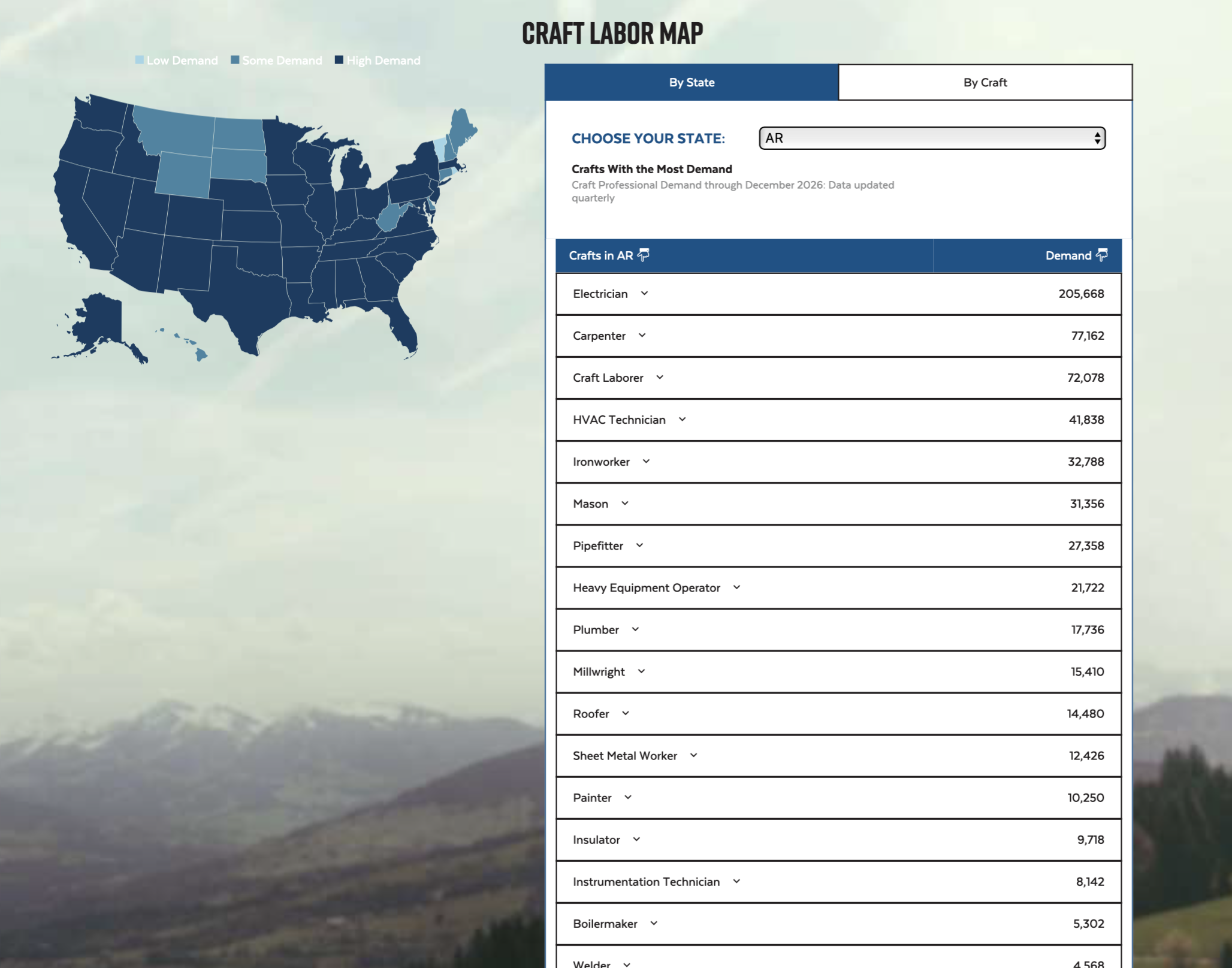
Arkansas is at a pivotal moment as energy demand grows, industries expand, and employers compete for the skilled talent needed to power the state’s future. The rapid growth of the advanced energy sector is creating jobs at a rate that far outpaces the national average, driving increased demand for workers with the technical skills needed to install, operate, maintain, and optimize emerging technologies, including electrification, grid modernization, advanced manufacturing, and energy efficiency systems. However, this growth is colliding with significant workforce shortages. Arkansas ranks fourth in the nation for demand for skilled craft labor, highlighting the urgent need to expand proven workforce solutions that connect individuals directly to high-demand careers. Across the Southeast, contractor shortages and “contractor deserts,” communities with an insufficient supply of qualified workers to meet growing infrastructure, energy efficiency, and housing upgrade needs, are becoming a barrier to economic growth and energy investment. While Arkansas has a strong construction and workforce foundation, the nationwide skilled trades shortage continues to challenge employers, with the majority of Arkansas energy employers reporting difficulty hiring qualified talent.
What is being done to grow apprenticeship opportunities in Arkansas?
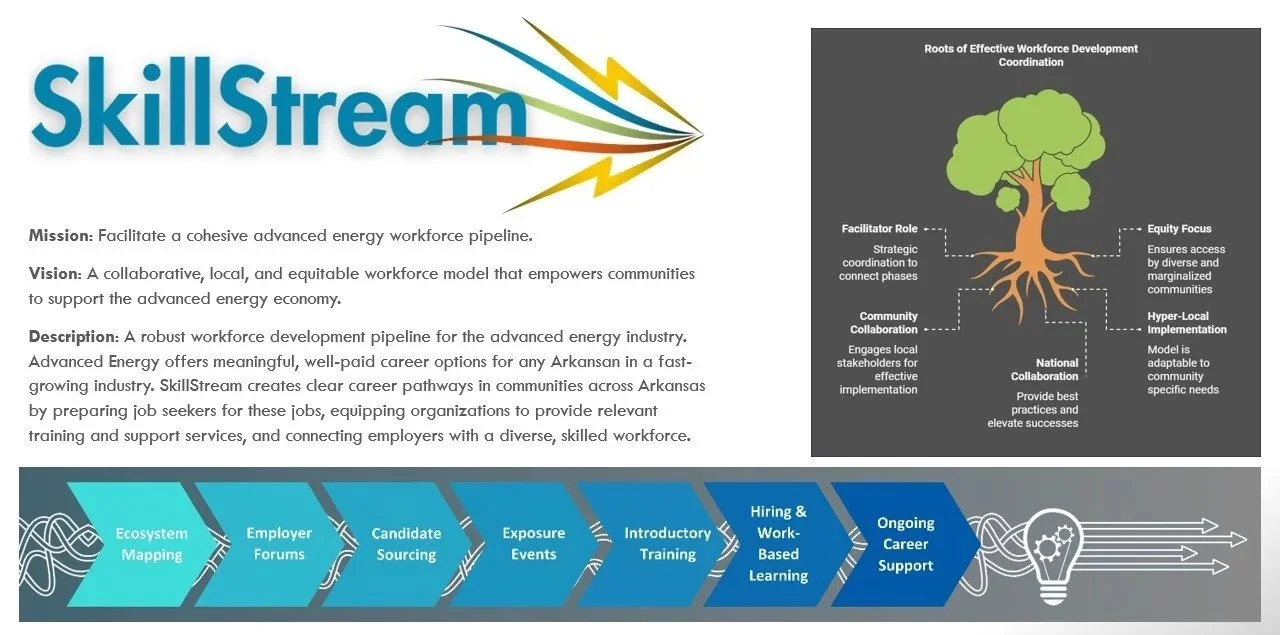
Initiatives like the Arkansas Advanced Energy Foundation’s SkillStream initiative address this critical gap by building a cohesive talent pipeline that connects job seekers, employers, and training providers to create a workforce prepared to support Arkansas’s growing advanced energy economy and provide family-sustaining career opportunities. Through SkillStream, we’ve been part of the apprenticeship process for more than 50 registered apprentices, met with hundreds of employers, hosted employer forums, hosted and participated in industry exposure events, coordinated externships for educators, and assisted employers with successful grant applications resulting in more than $200,000 in training cost reimbursements.
What are the next steps for those interested in finding an apprenticeship? For employers who want to start an apprenticeship program?
I’m happy to guide individuals and businesses on the next steps! Anyone interested can contact me directly at workforce@arkansasadvancedenergy.com to explore their options.

April Ambrose, LEED Fellow and GCP, is the Director of Workforce Development for the Arkansas Advanced Energy Foundation. She is an Arkansas native with over 20 years of experience in the sustainability and advanced energy industry. April designed her own major at Hendrix College in Environmental Education, founded Arkansas Earth Day Foundation among other non-profit leadership, provided over 500 educational presentations to local and national groups, and grew Entegrity, a Little Rock based energy and sustainability consulting and development firm, from two to 130 employees with 9 offices.