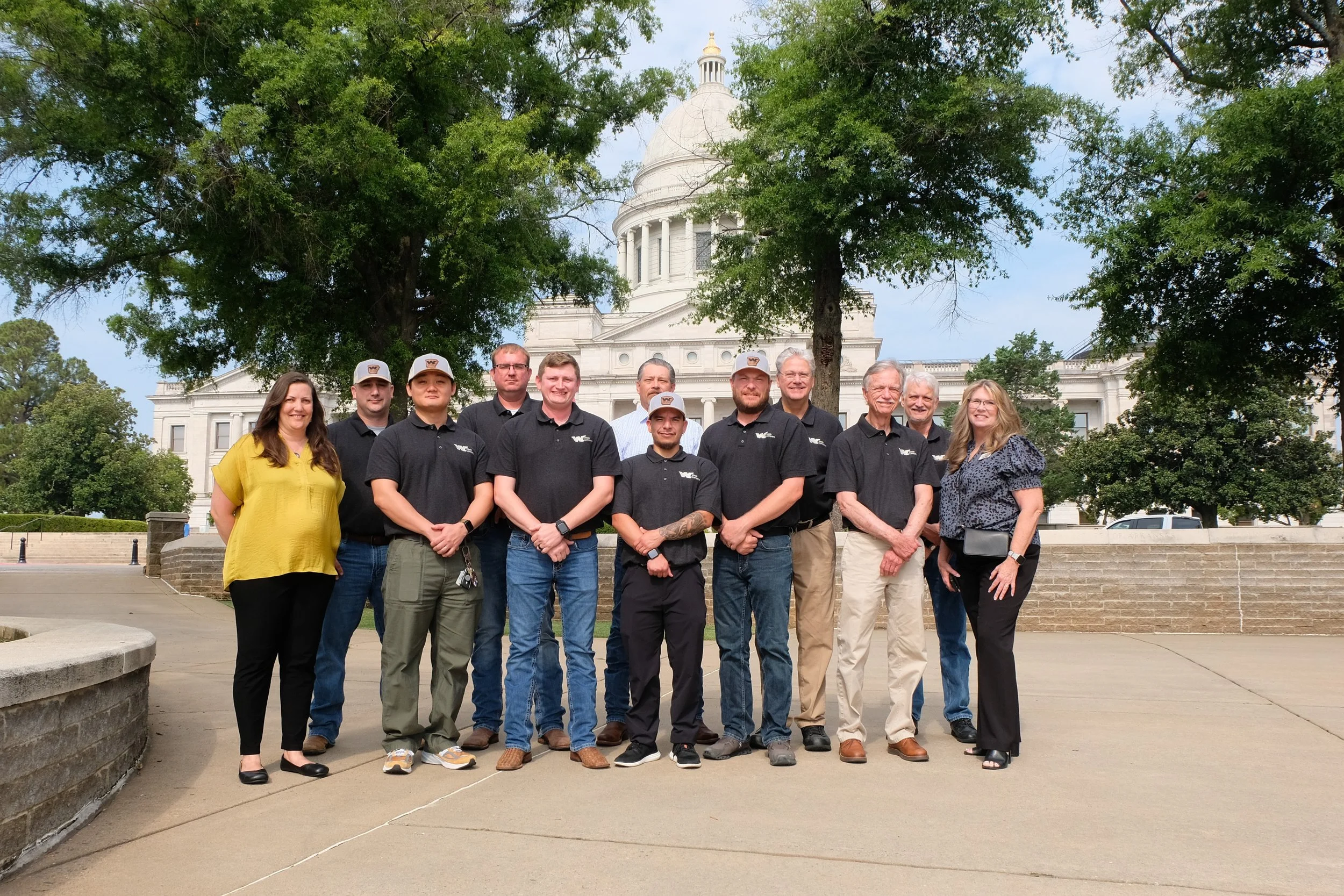
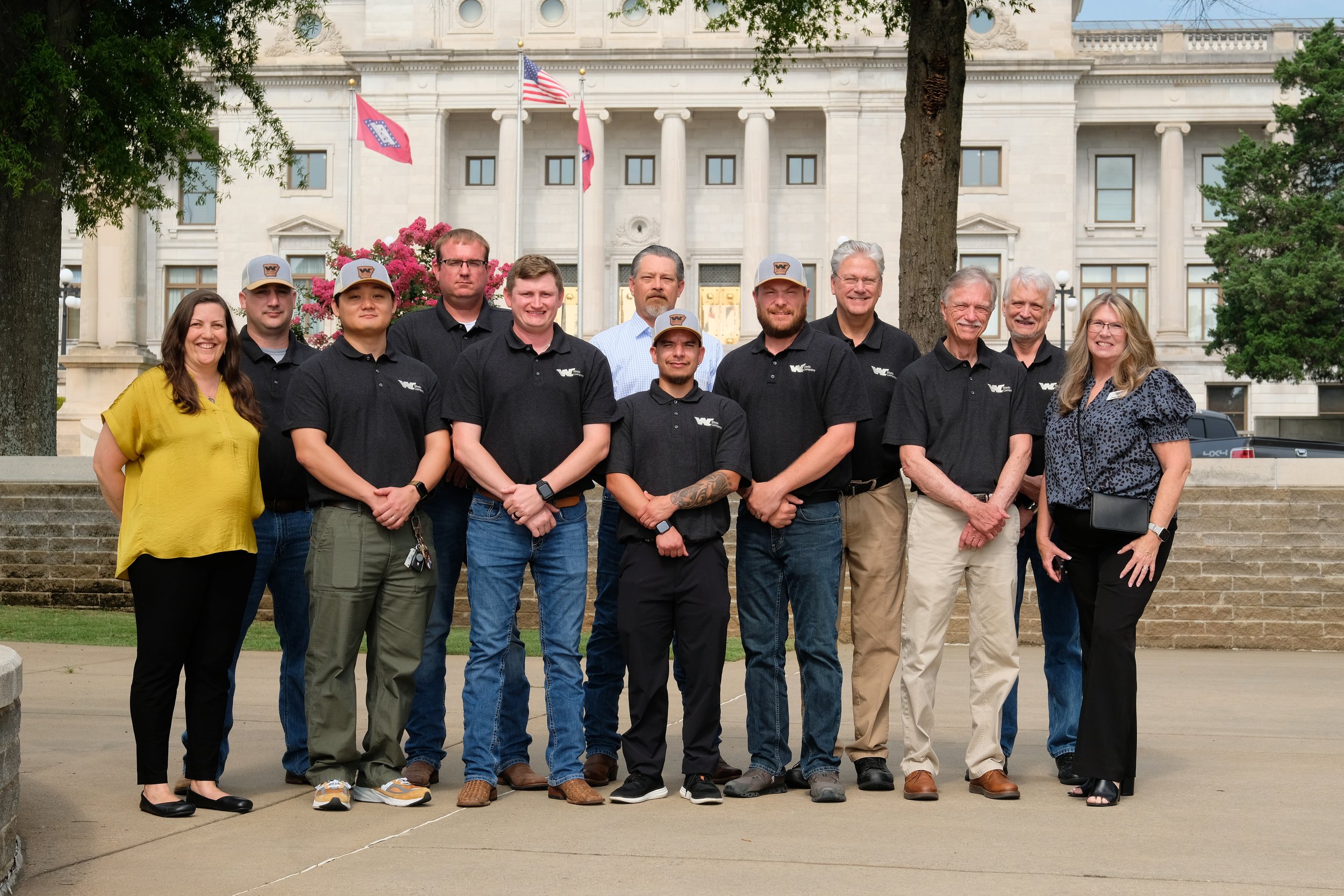
Arkansas-based Wade Company celebrates graduation of six registered instrumentation and controls apprentices
Industry, union, workforce partners create specialized training pathway for Arkansas’s growing building controls workforce
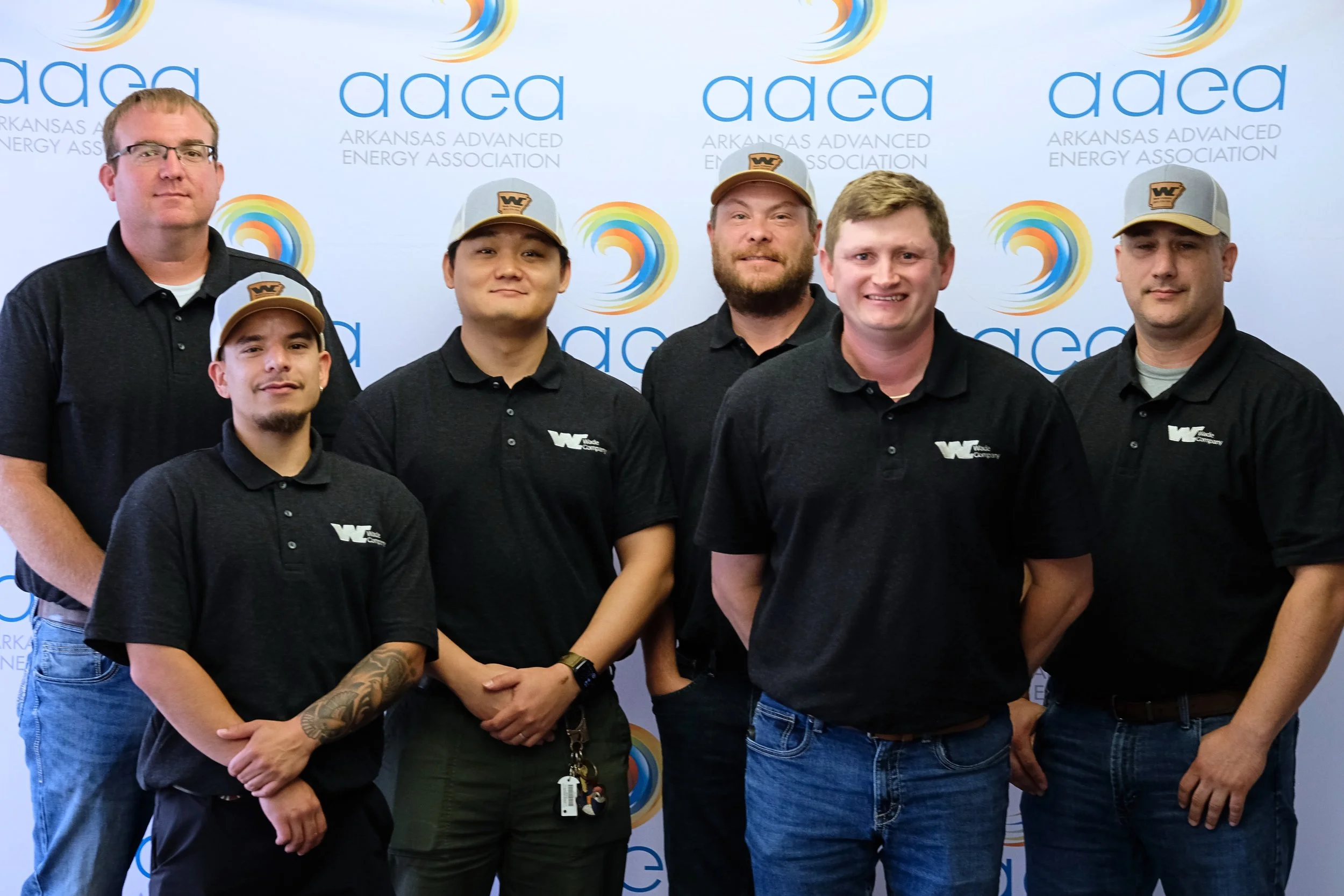
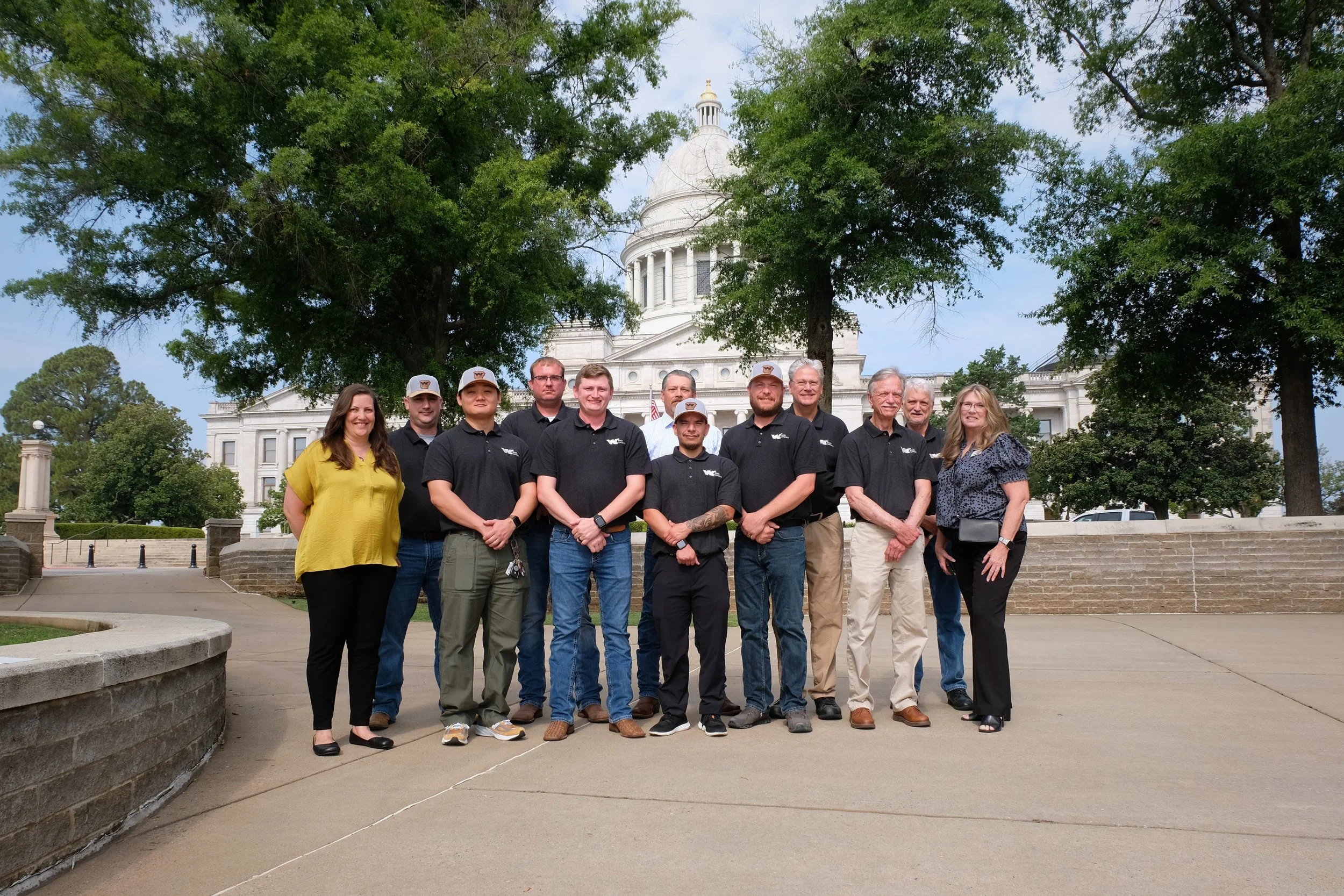
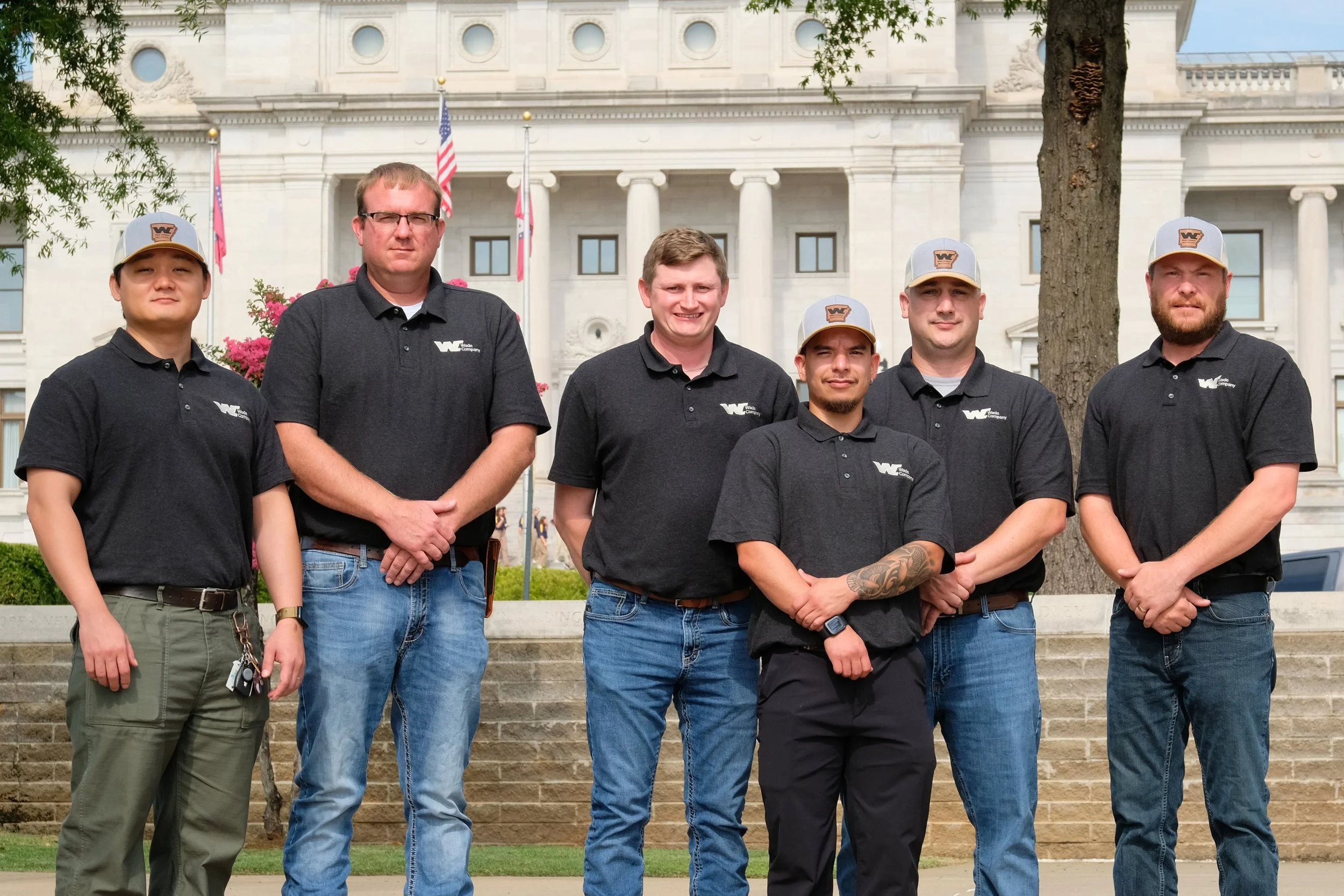
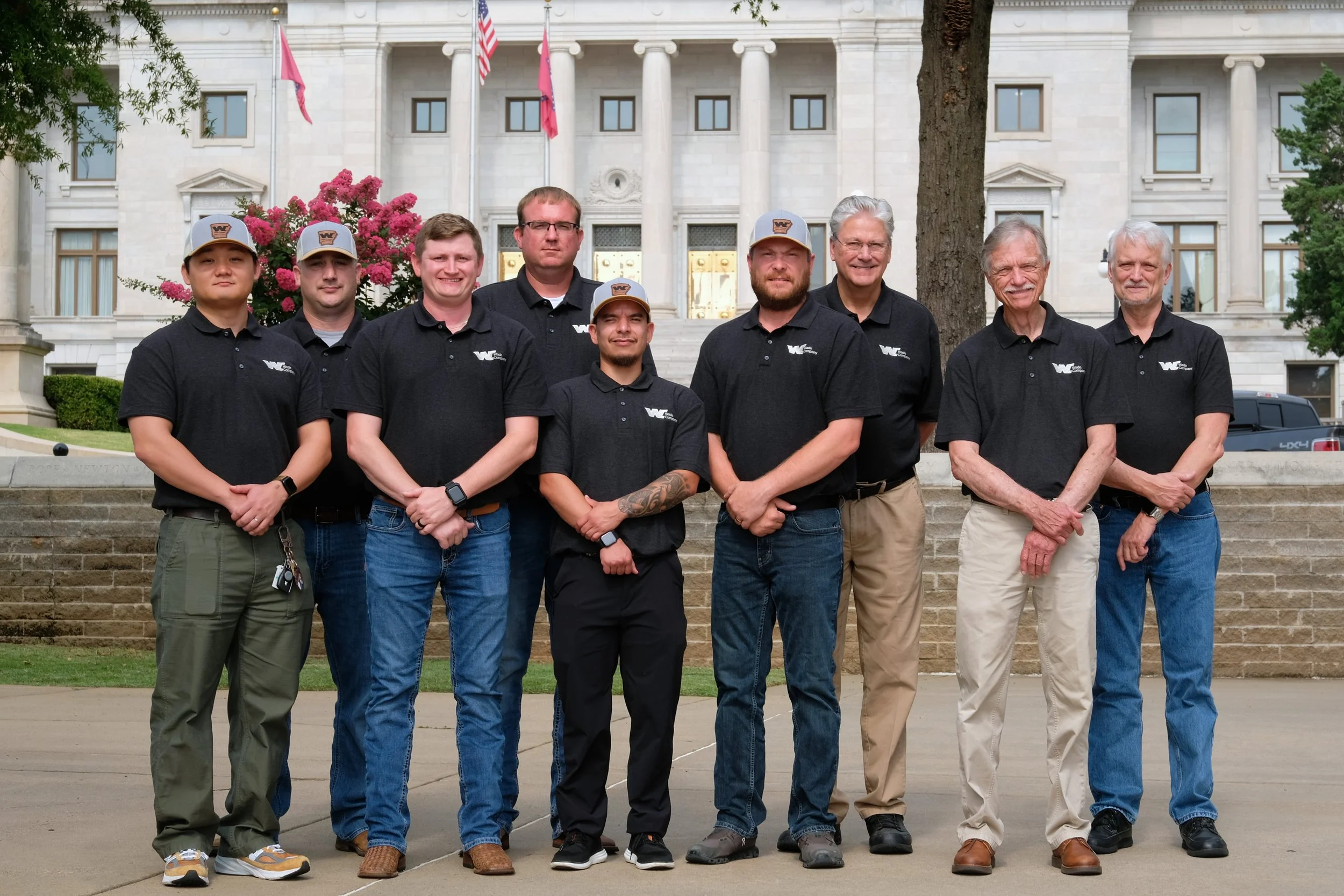
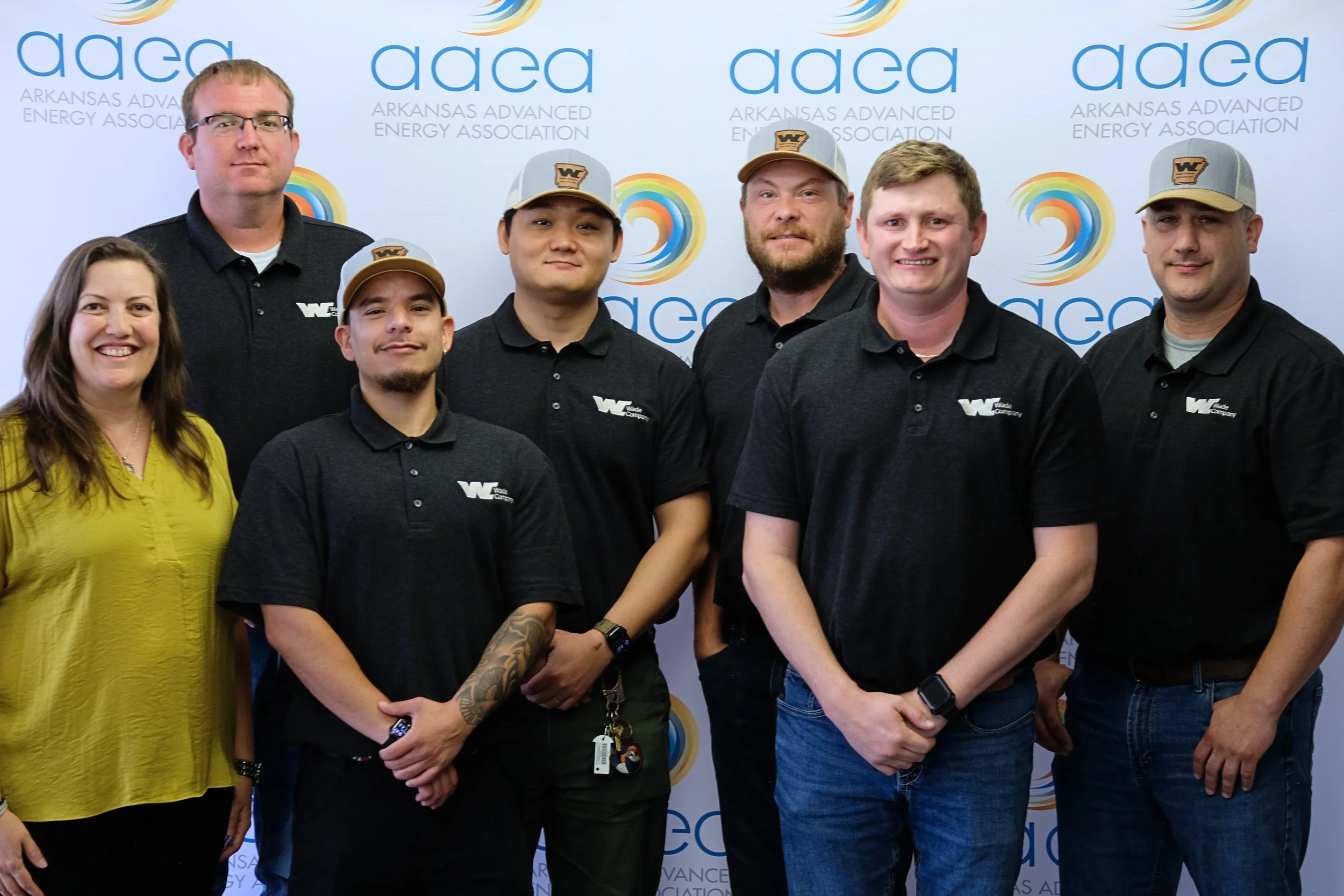
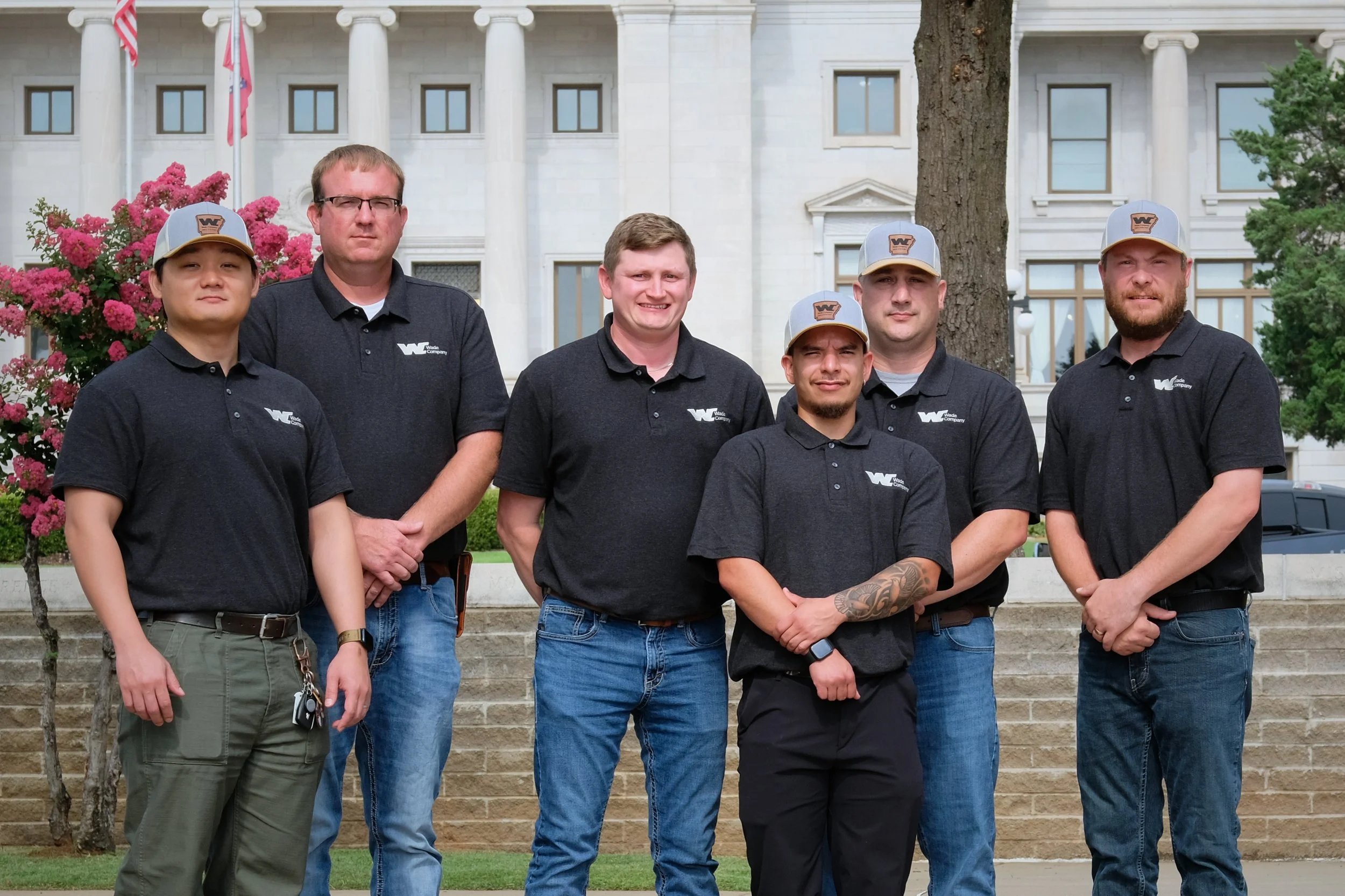
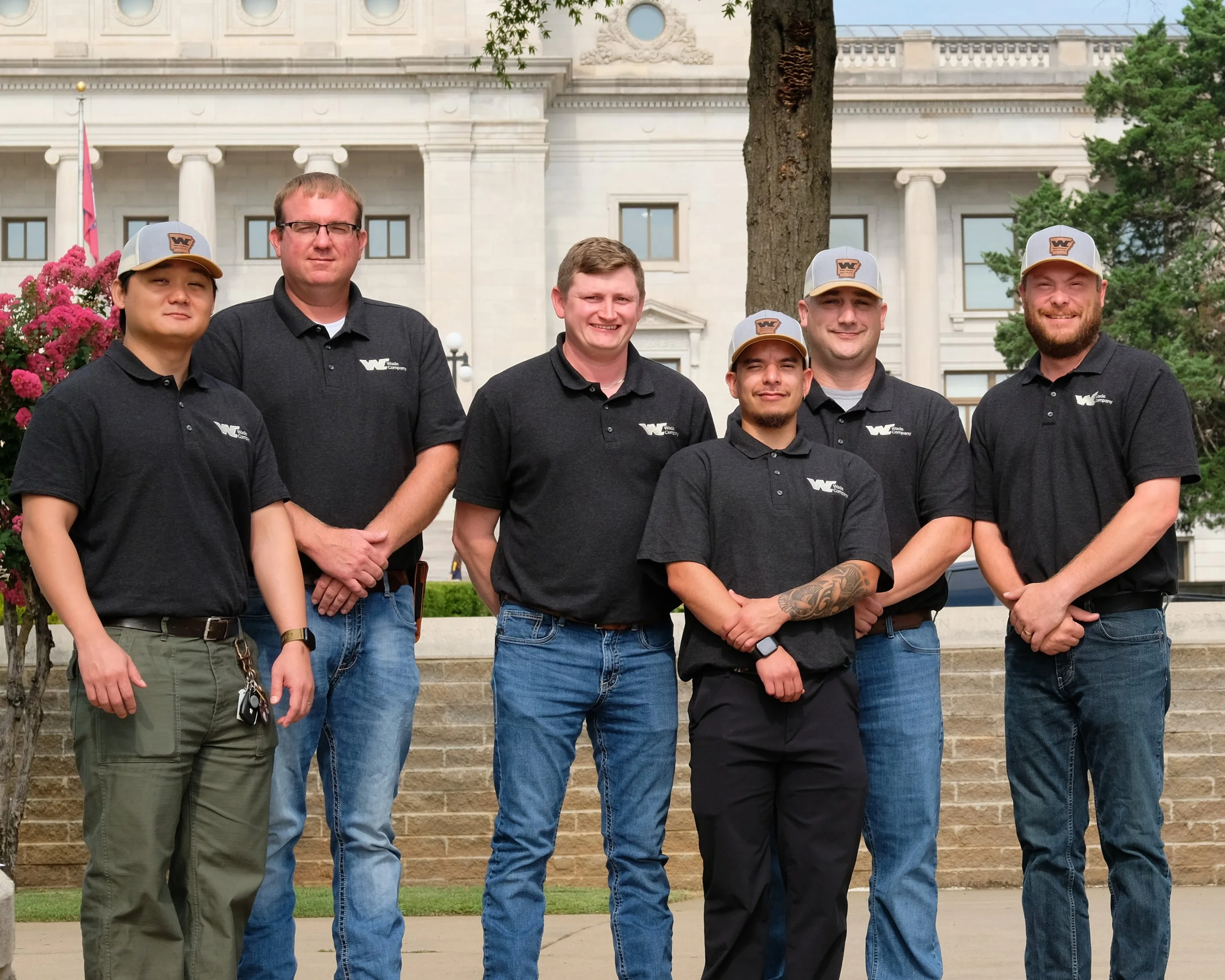
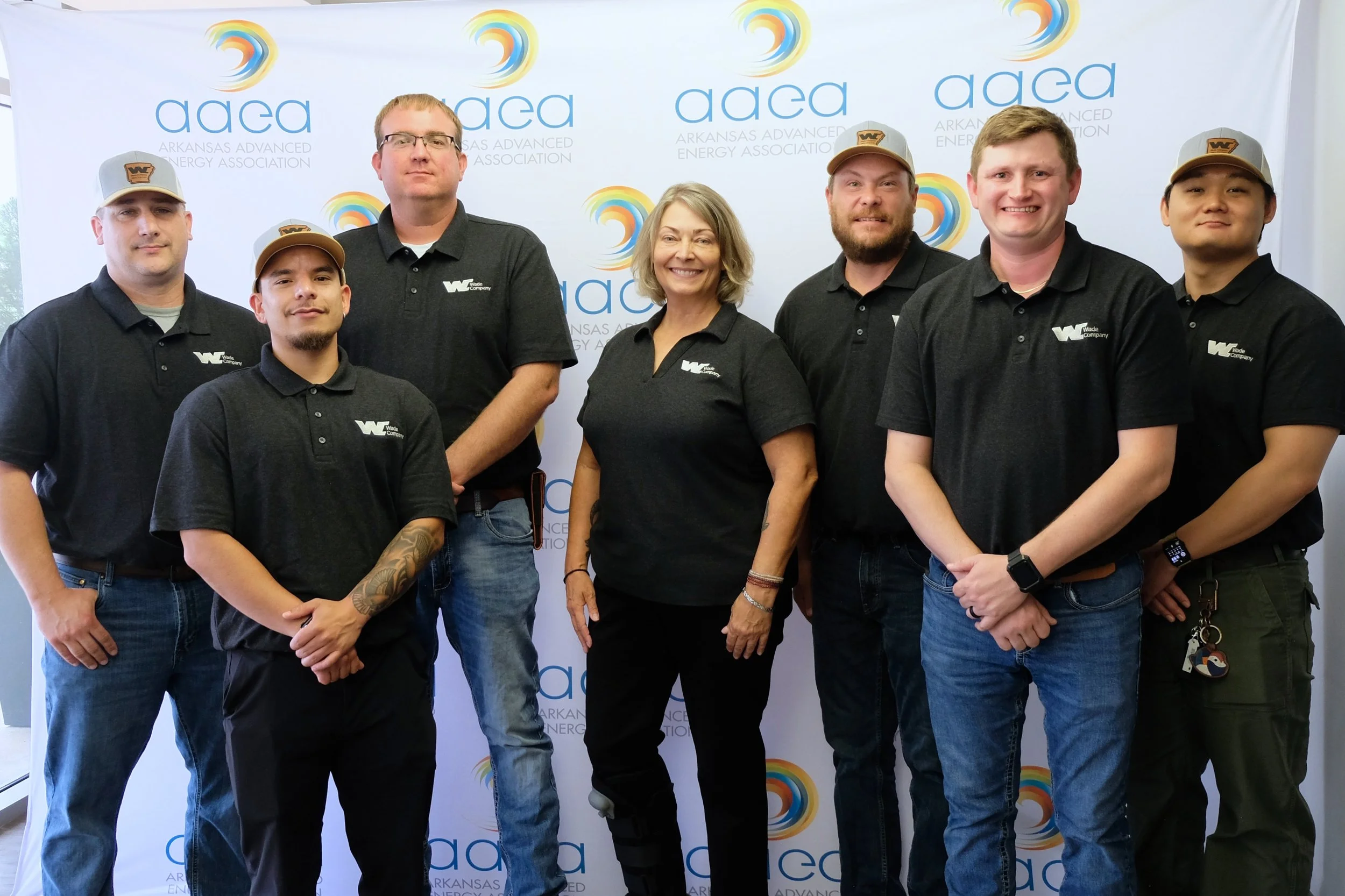
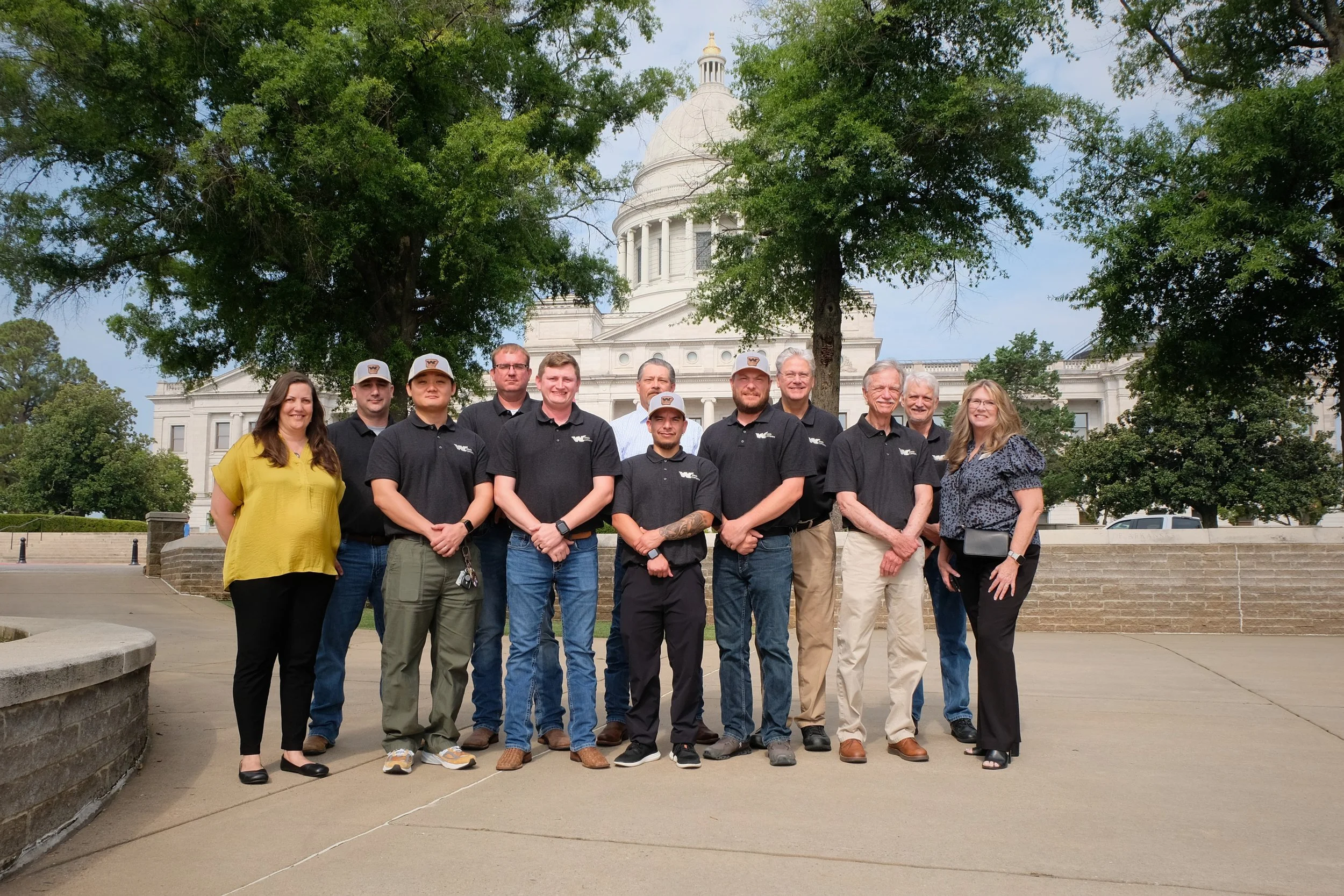
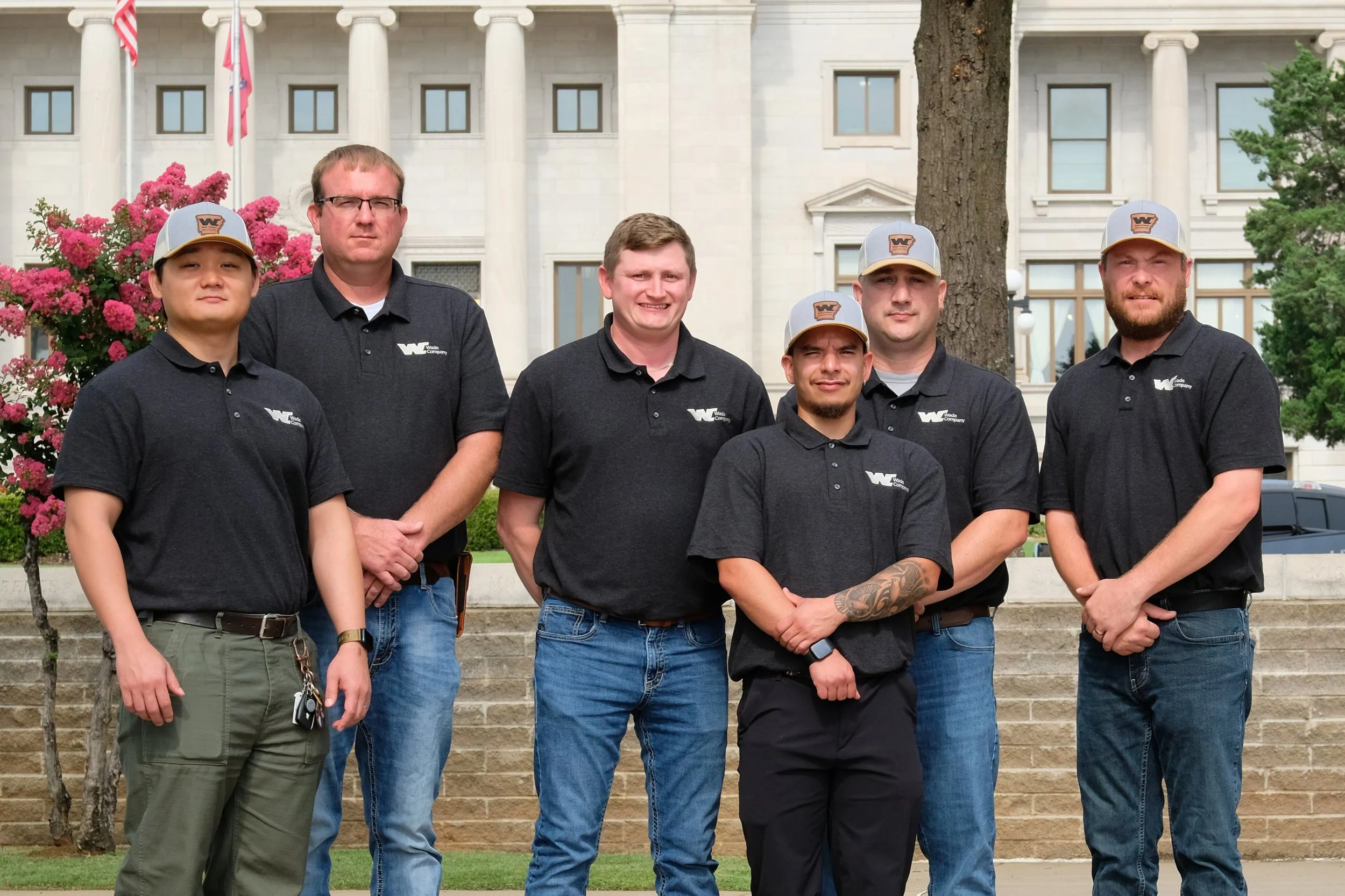
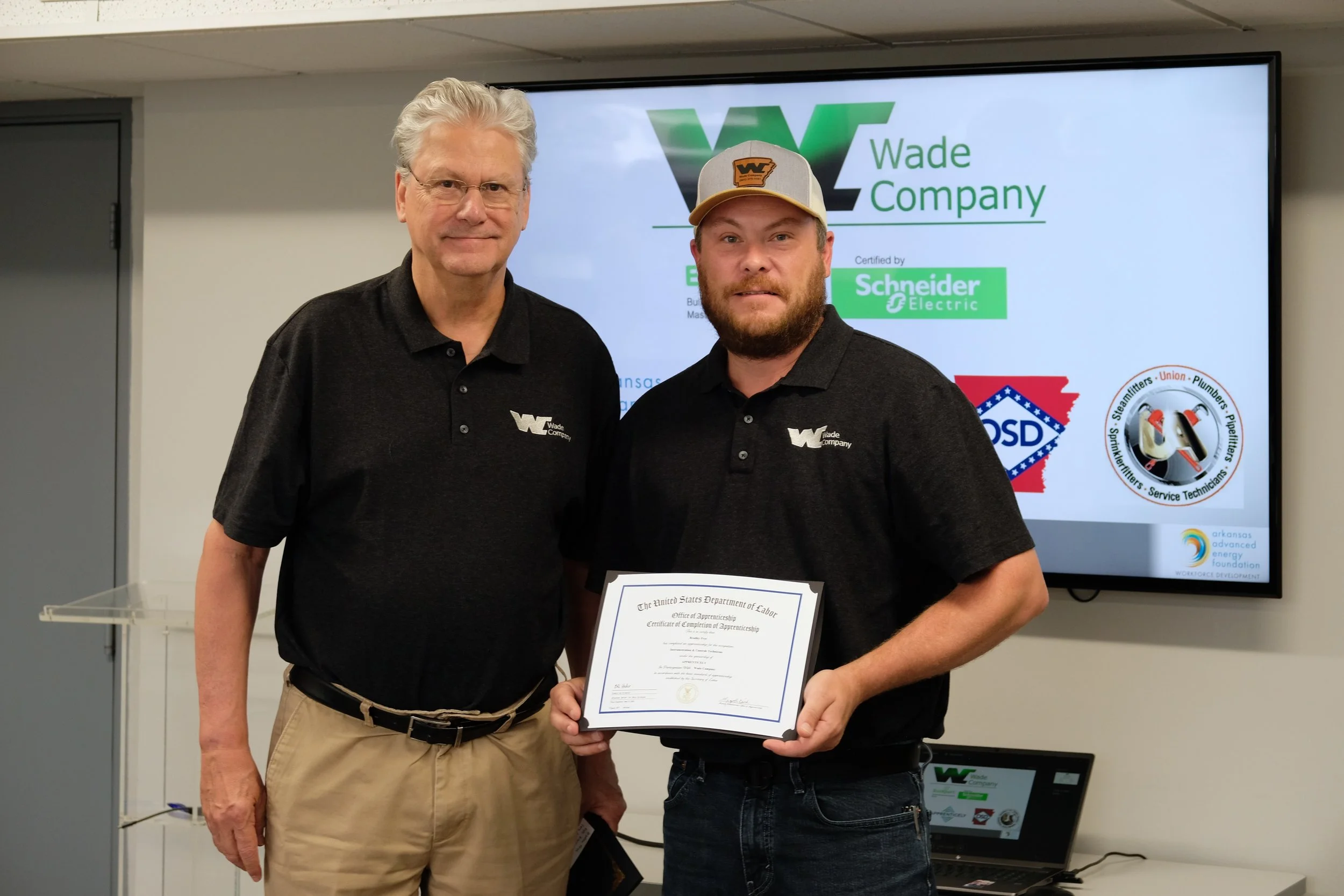
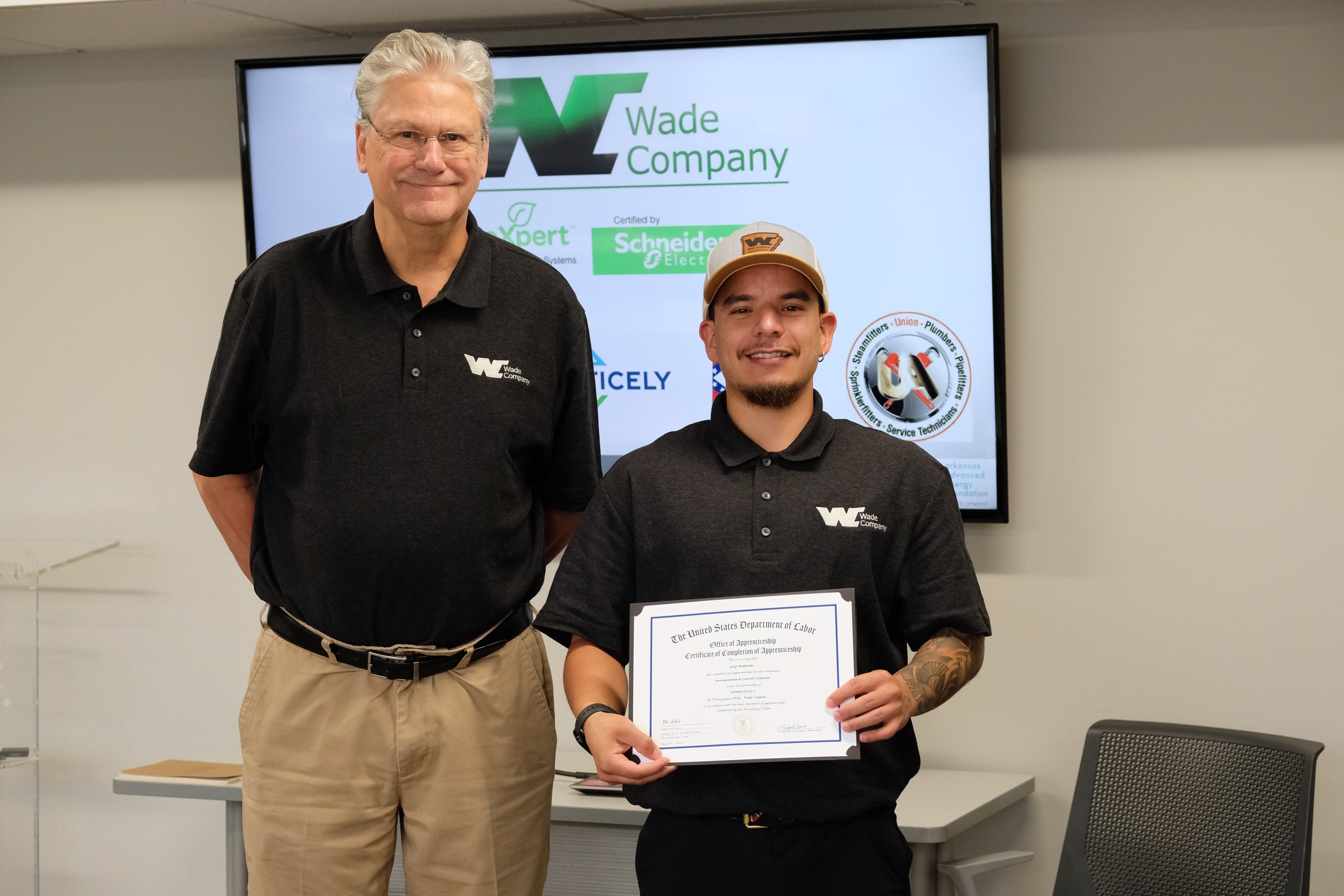
Wade Company, an Arkansas-based HVAC and controls company, has celebrated the graduation of six employees from its 2026 Instrumentation and Controls Technician Registered Apprenticeship, a two-and-a-half-year program conducted in partnership with Apprenticely, United Association of Plumbers and Pipefitters Local Union 155 (UA Local 155), and the Arkansas Advanced Energy Foundation (AAEF).
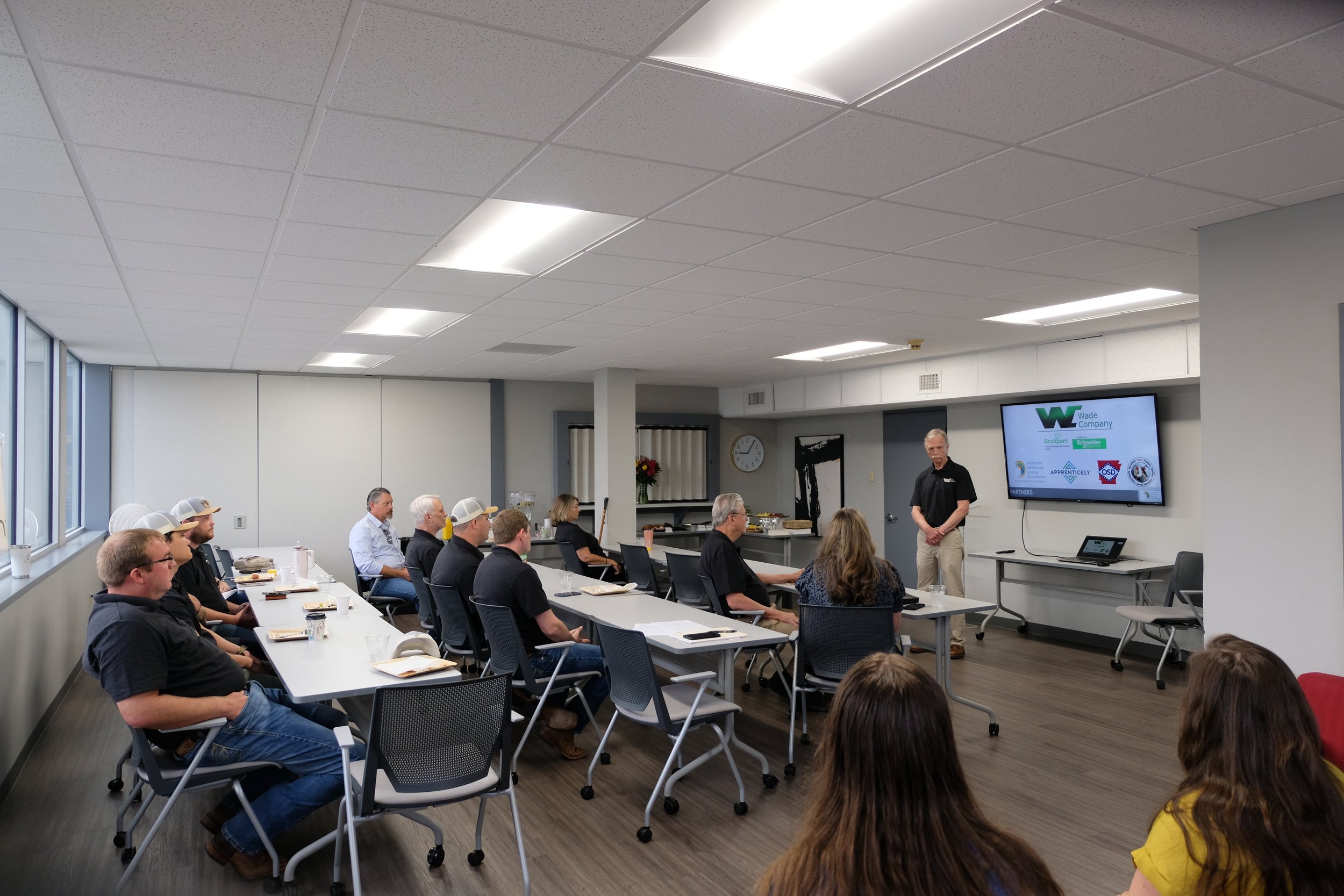
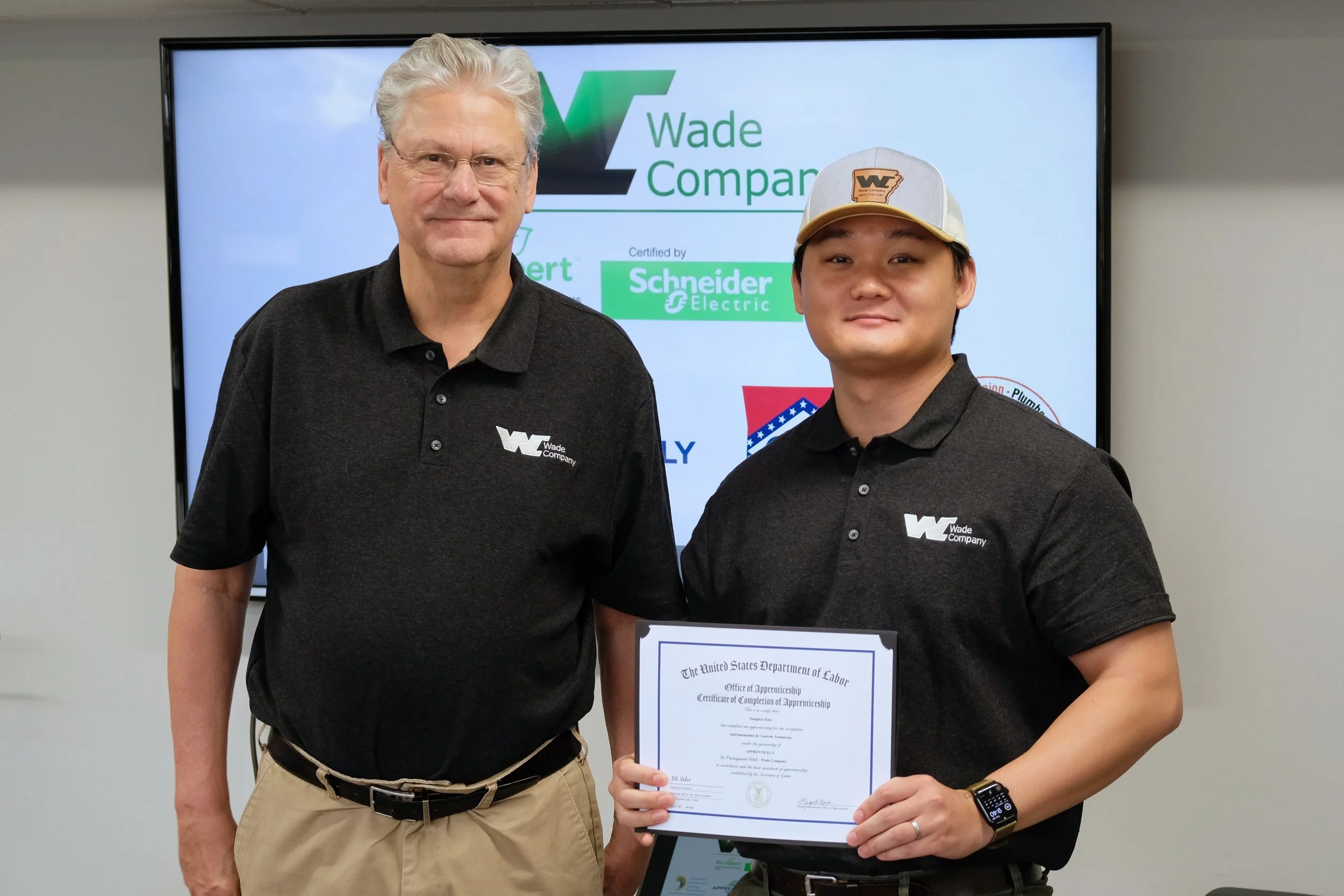
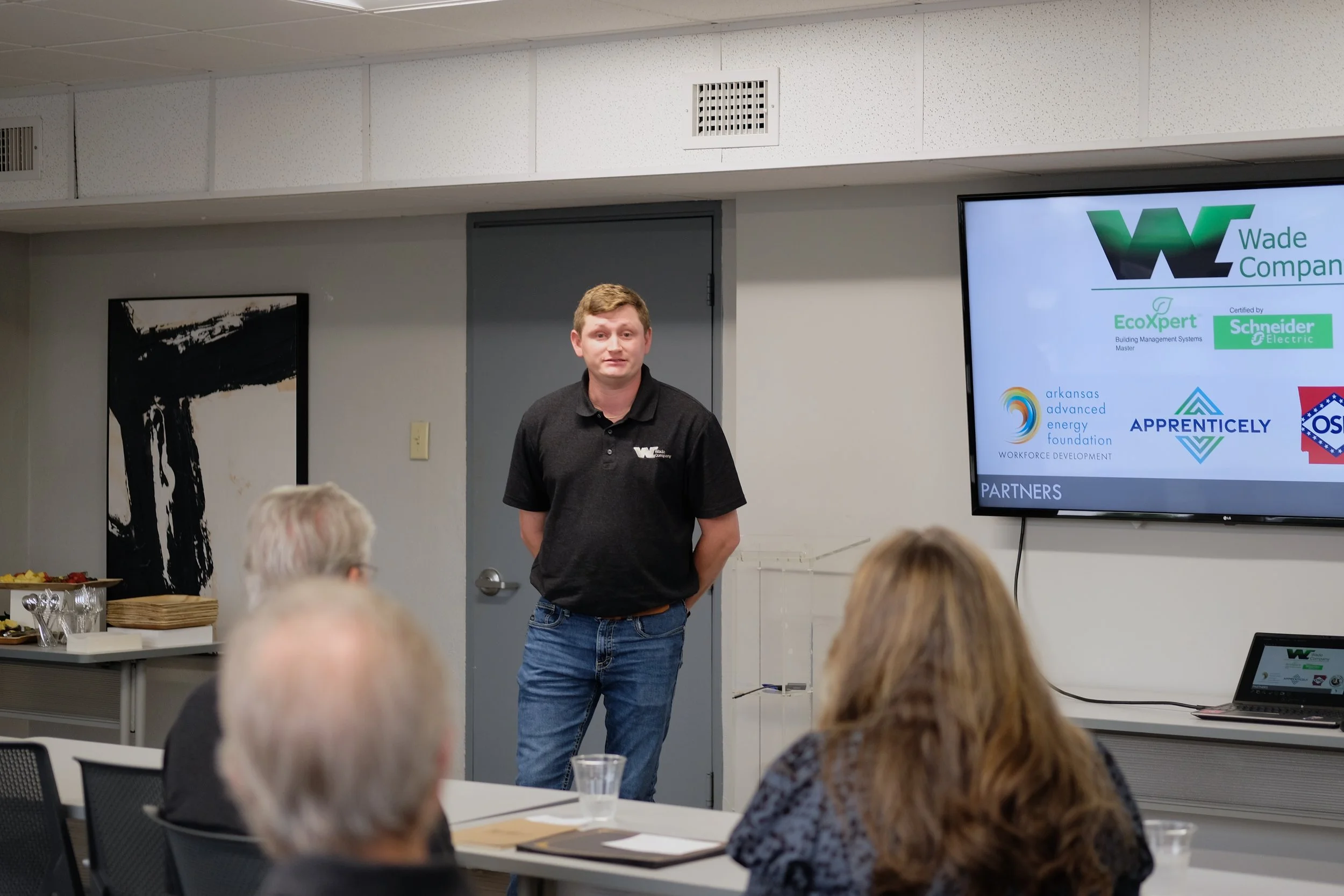
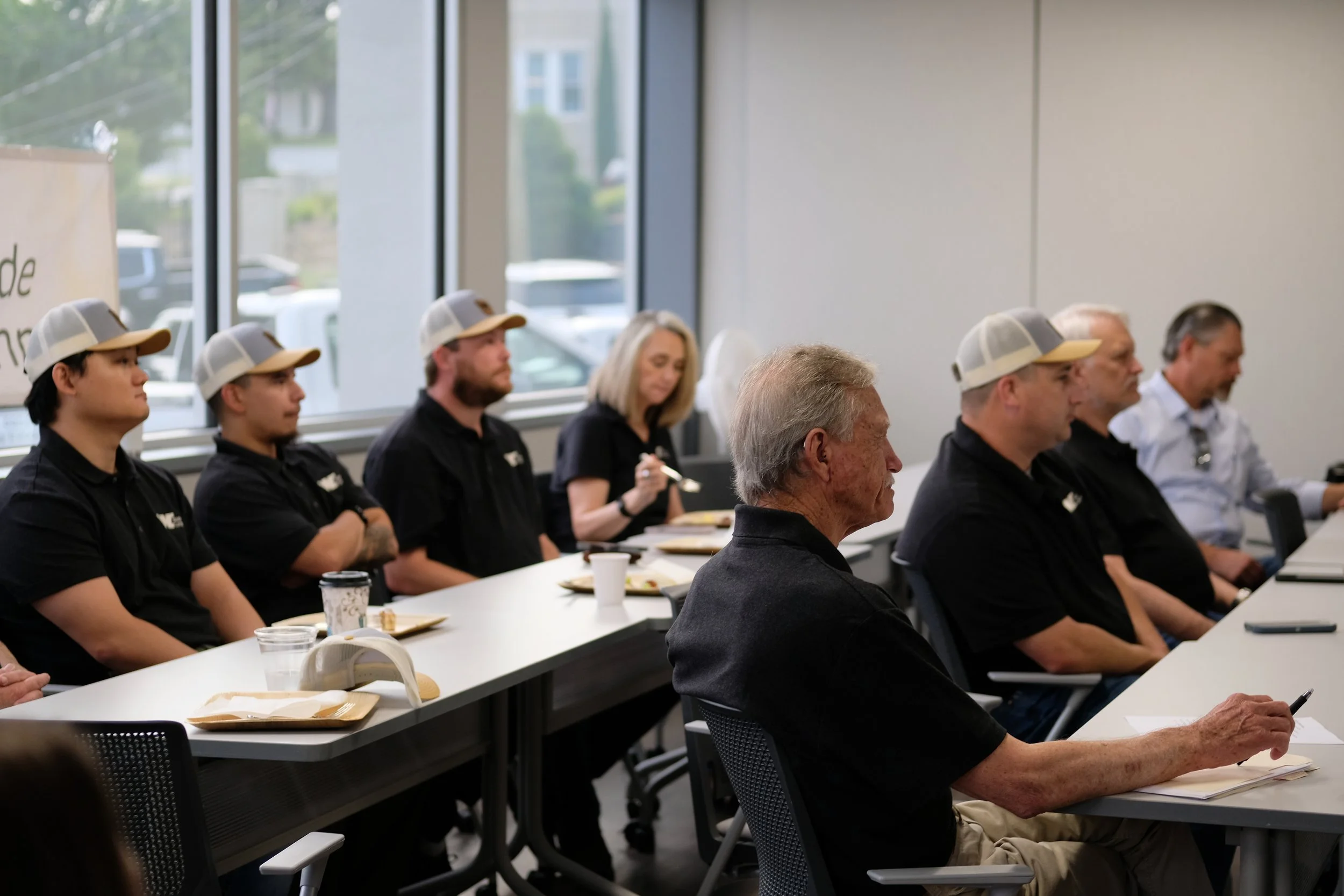
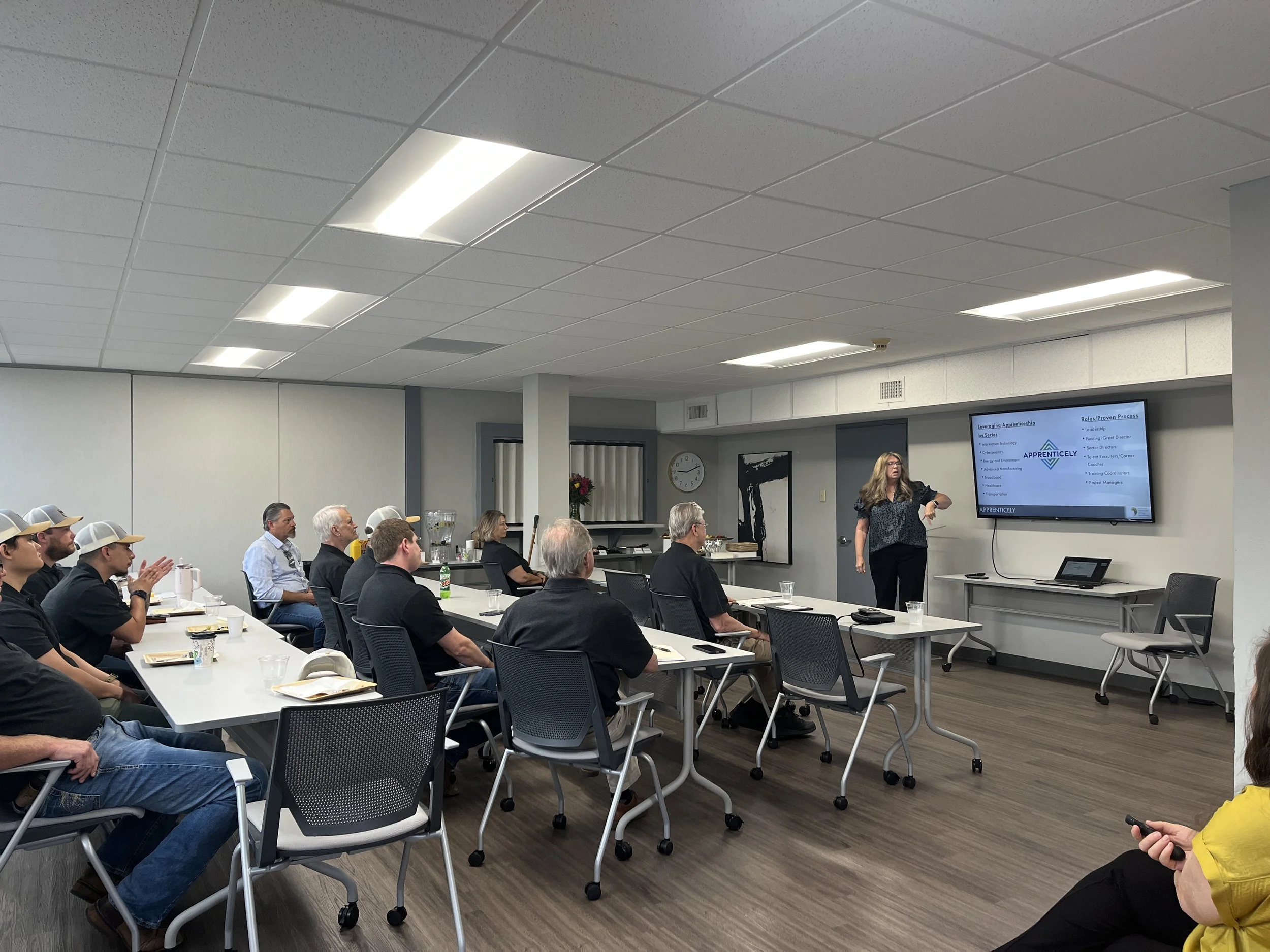
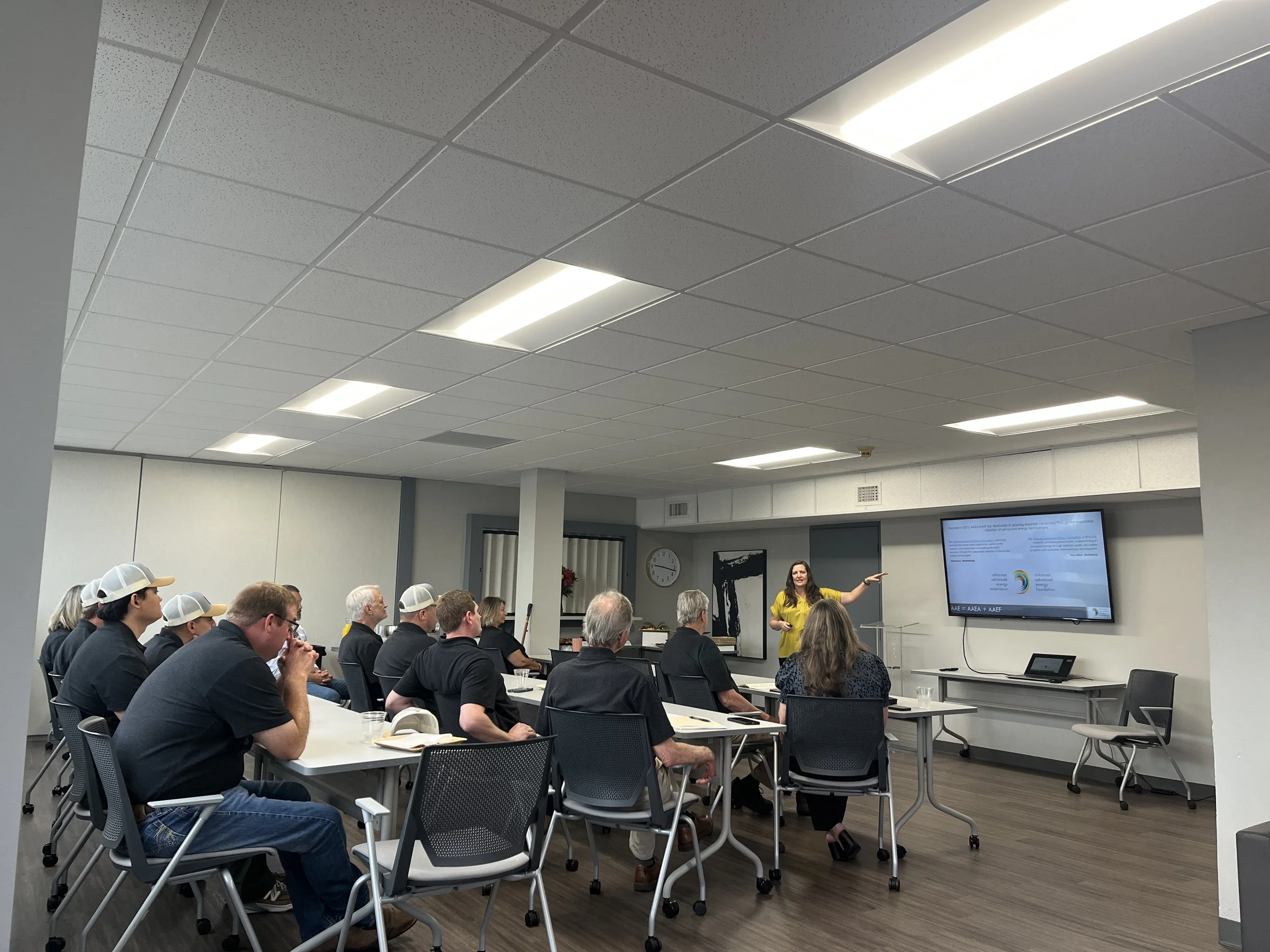
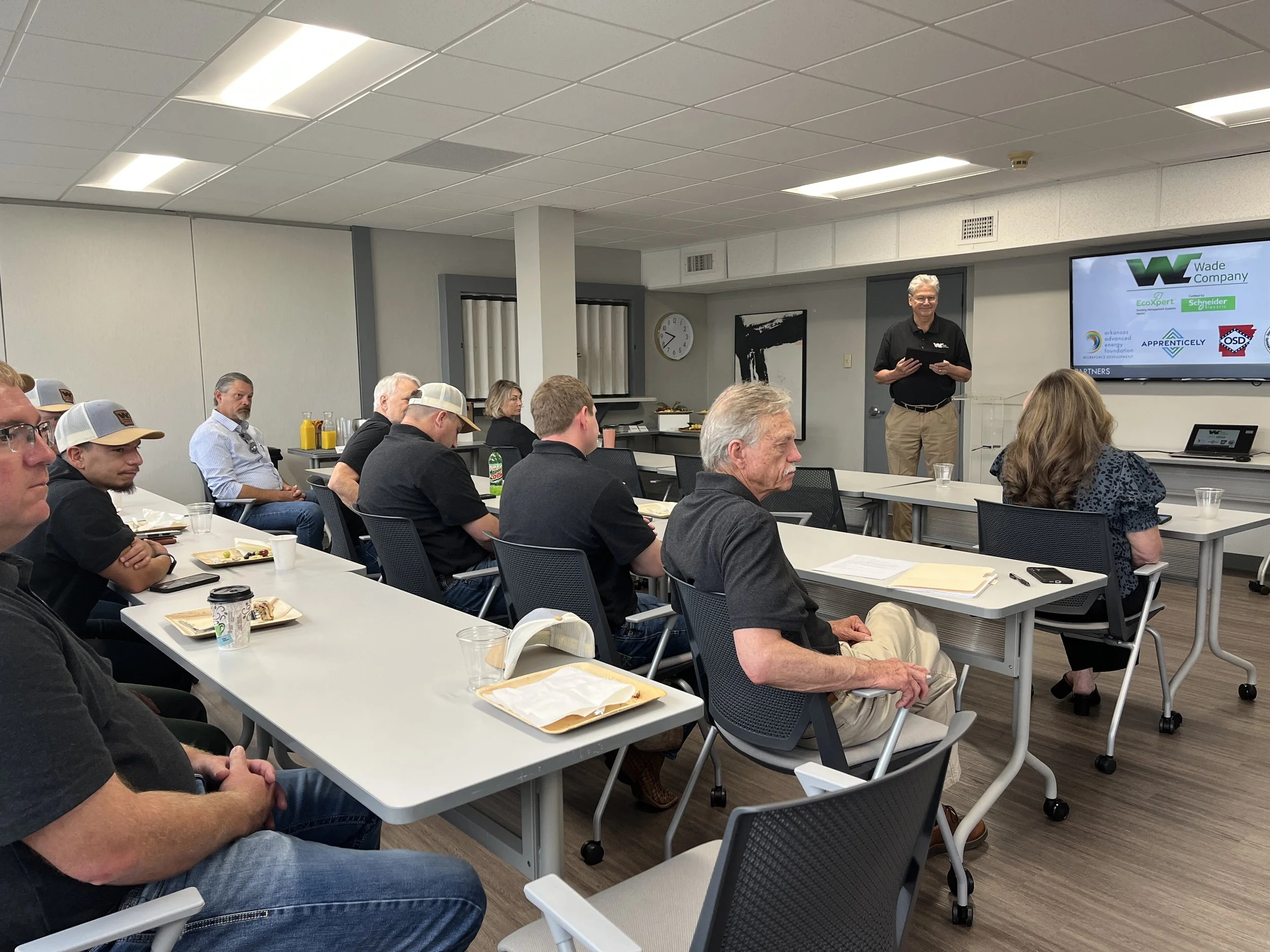
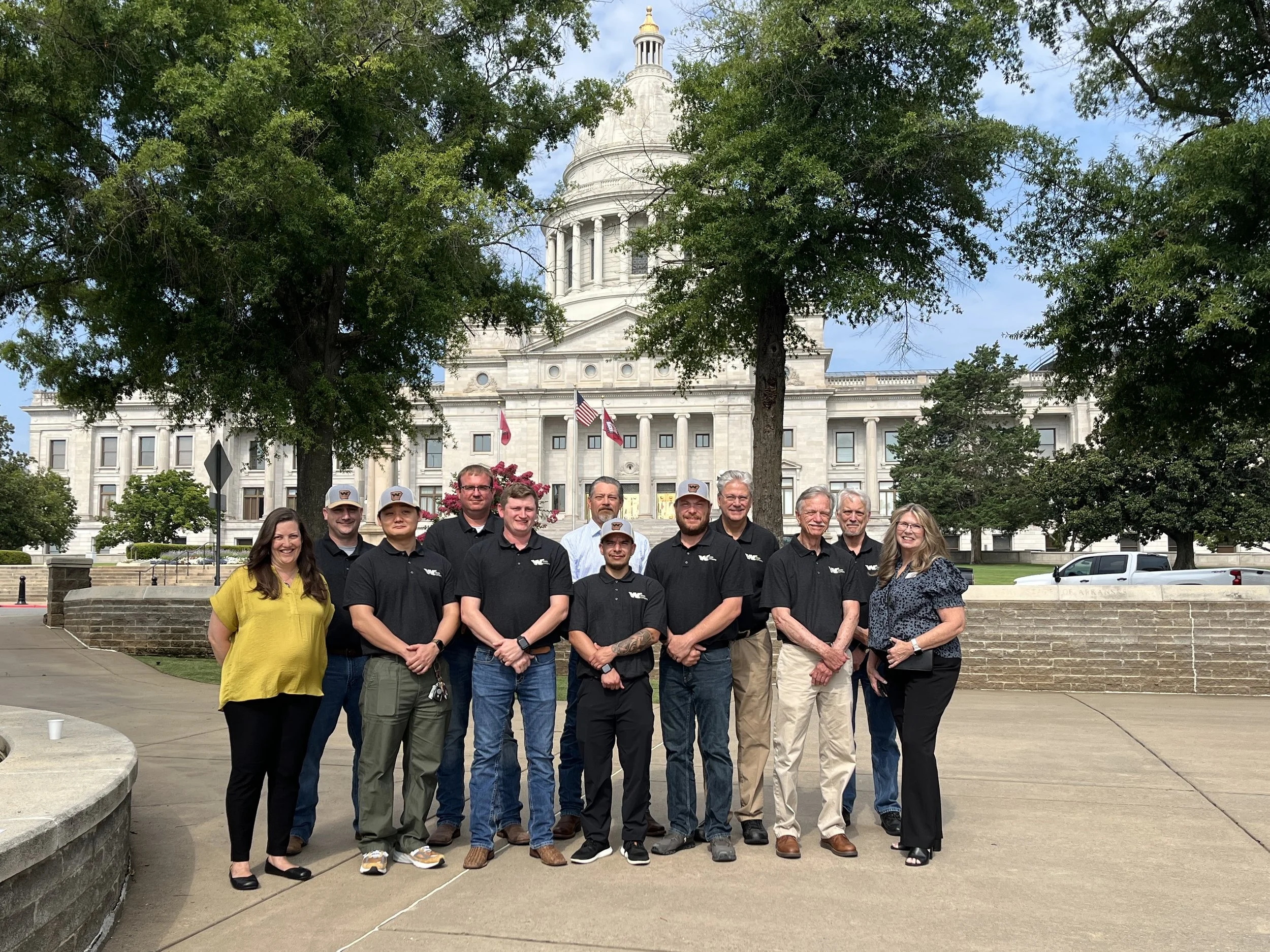
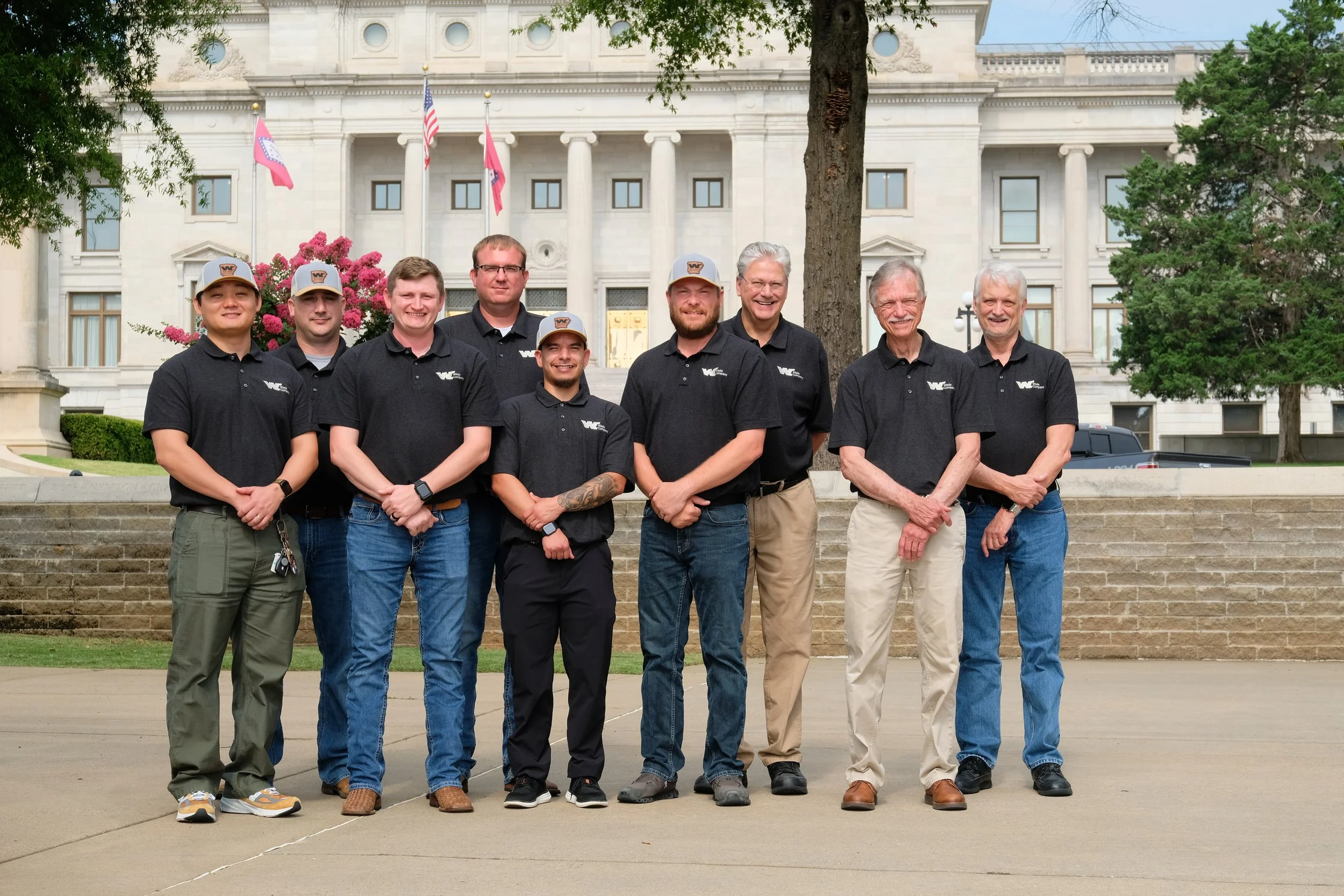
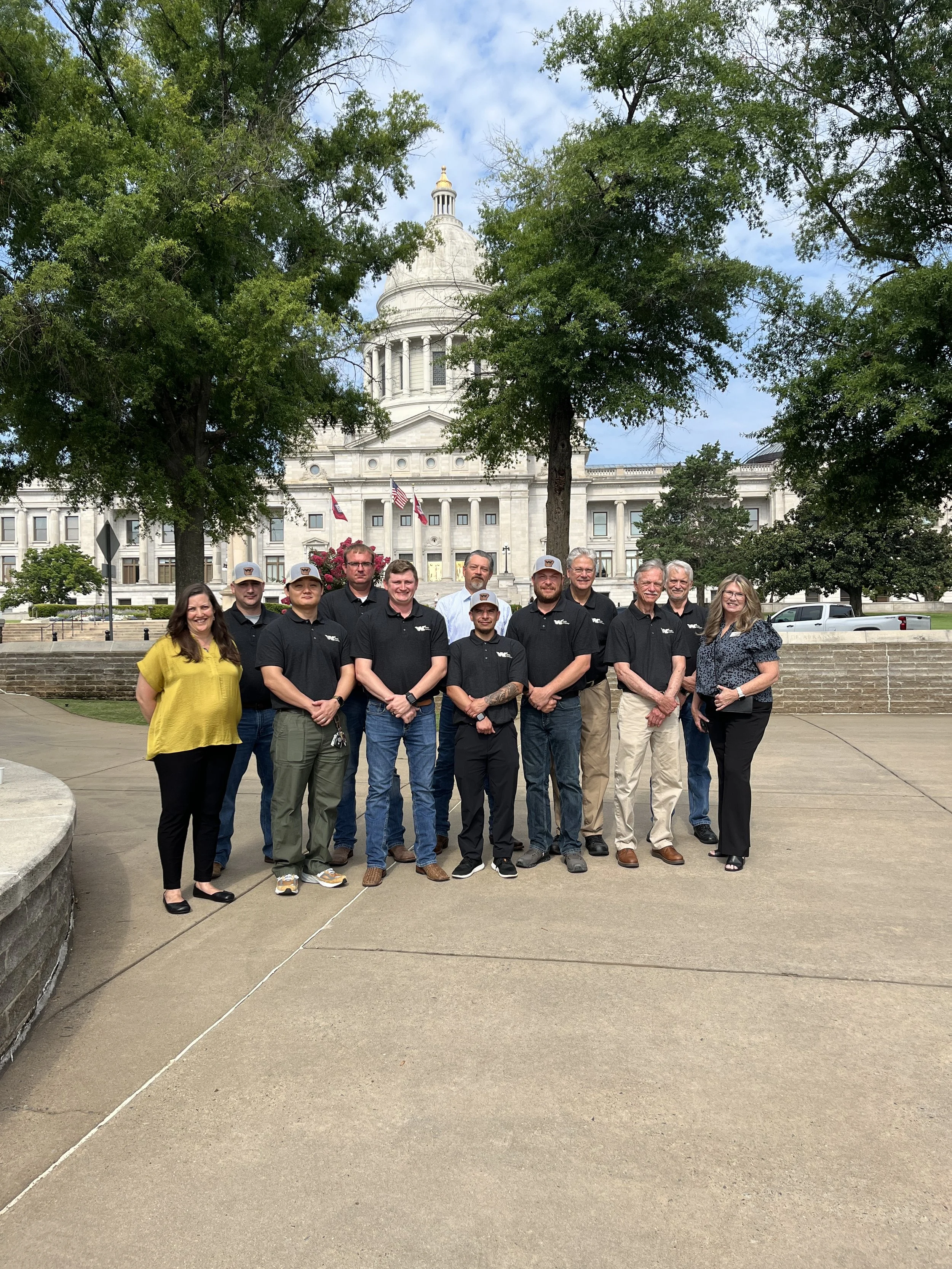
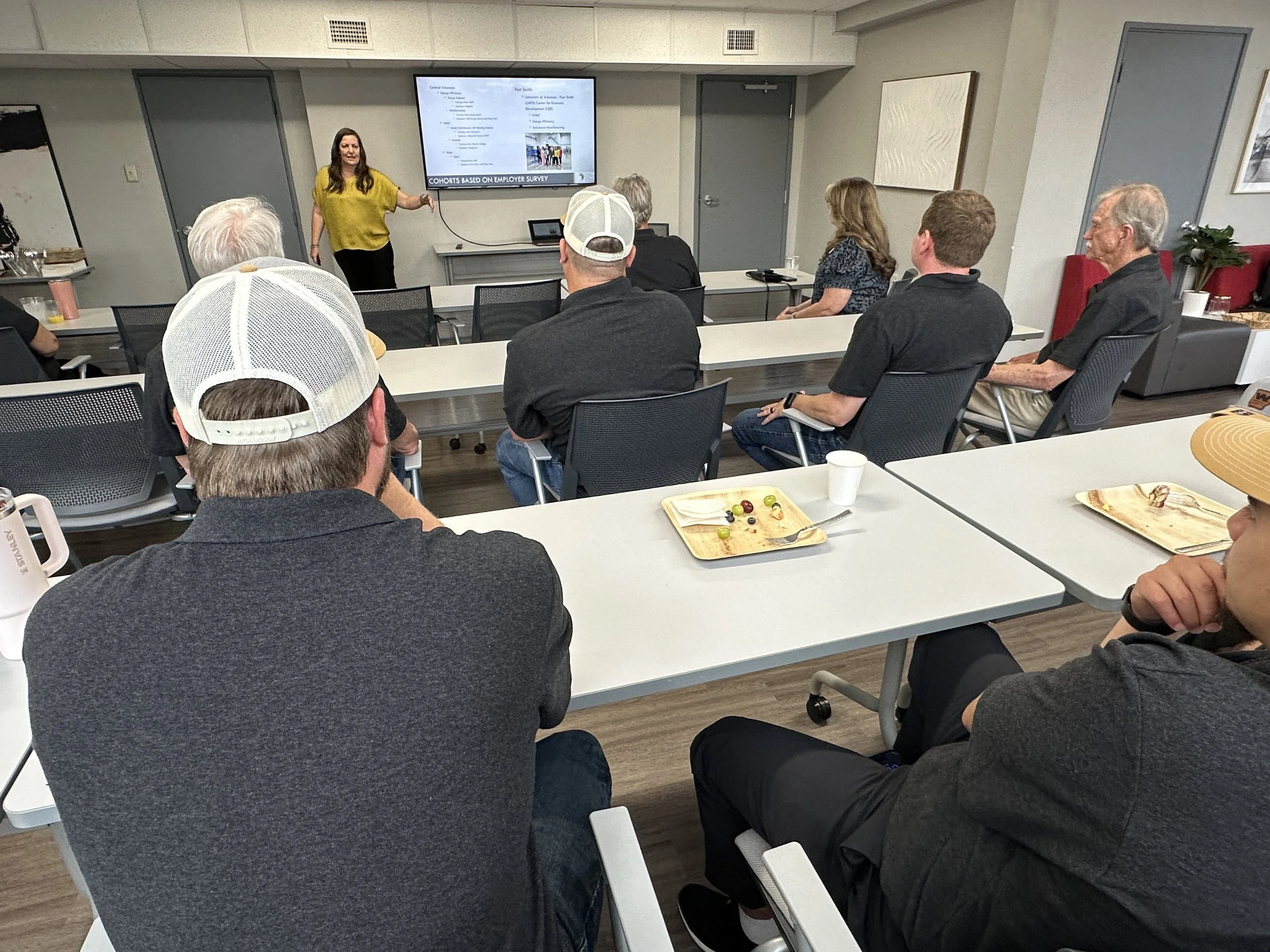
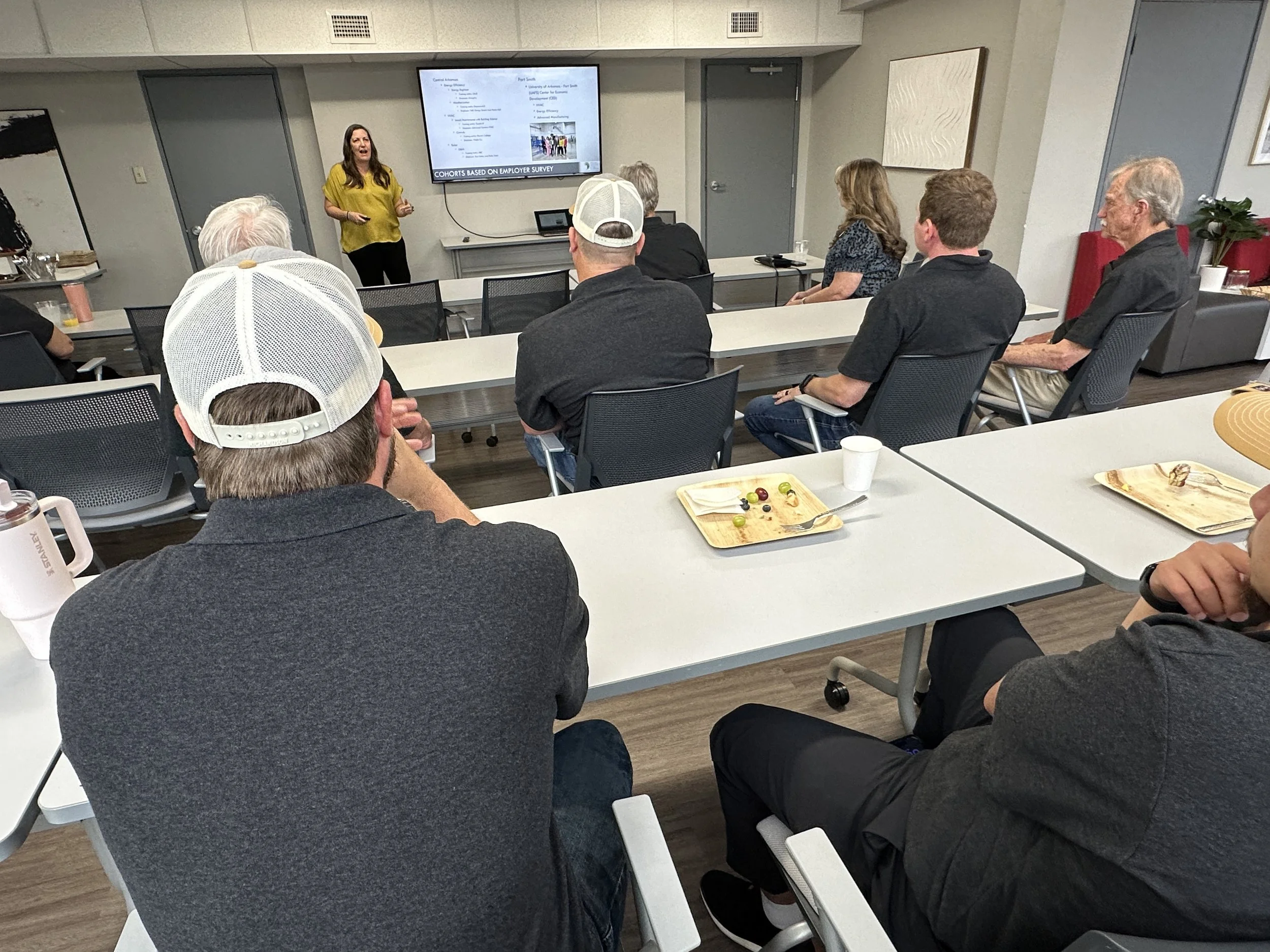
The graduates were recognized during a July 30 ceremony at the Arkansas Press Association in Little Rock. The 2026 graduating class include Bradley Frye, Matthew High, Dongkyu Kim, Jorge Maldonado Ruiz, Cary McFarlin, and Kyle Ritchie.
“Finding and recruiting candidates to become Control Technicians and engineers has always been a challenge,” said Danny Brown, Principal at Wade Company. “Apprentices come to us from tech schools, military, job fairs, union halls, and some referrals. New hires go through a probation period where we decide if they like it and want to stick with it. It can be stressful, rewarding, and compelling all at the same time.”
Building automation and controls is a highly technical field requiring knowledge of HVAC, electrical systems, networking, programming and troubleshooting. With few established industry-wide training pathways beyond manufacturer certifications, technicians often enter the field from other occupations and develop skills over several years of on-the-job experience.
“The apprenticeship program gives people a clear path into an industry that can otherwise be difficult to enter,” said graduate Kyle Ritchie. “It can take years for someone to become a well-rounded technician. This program combines classroom instruction, manufacturer training, and hands-on field experience into a structured career path.”
A key component of the program – and unique to apprenticeship programs in general - is Wade Company’s collaboration with United Association (UA) of Plumbers and Pipefitters Local Union 155. Wade Company has been a union contractor for over a decade with its controls technicians participating in the local UA. As building technology has evolved, the work performed by commercial HVAC controls technicians has increasingly shifted from traditional electrical or pneumatic controls to digital building automation systems. Employees seeking union membership had to complete an HVAC technician apprenticeship that did not align with the specialized skills they used in their day-to-day work.
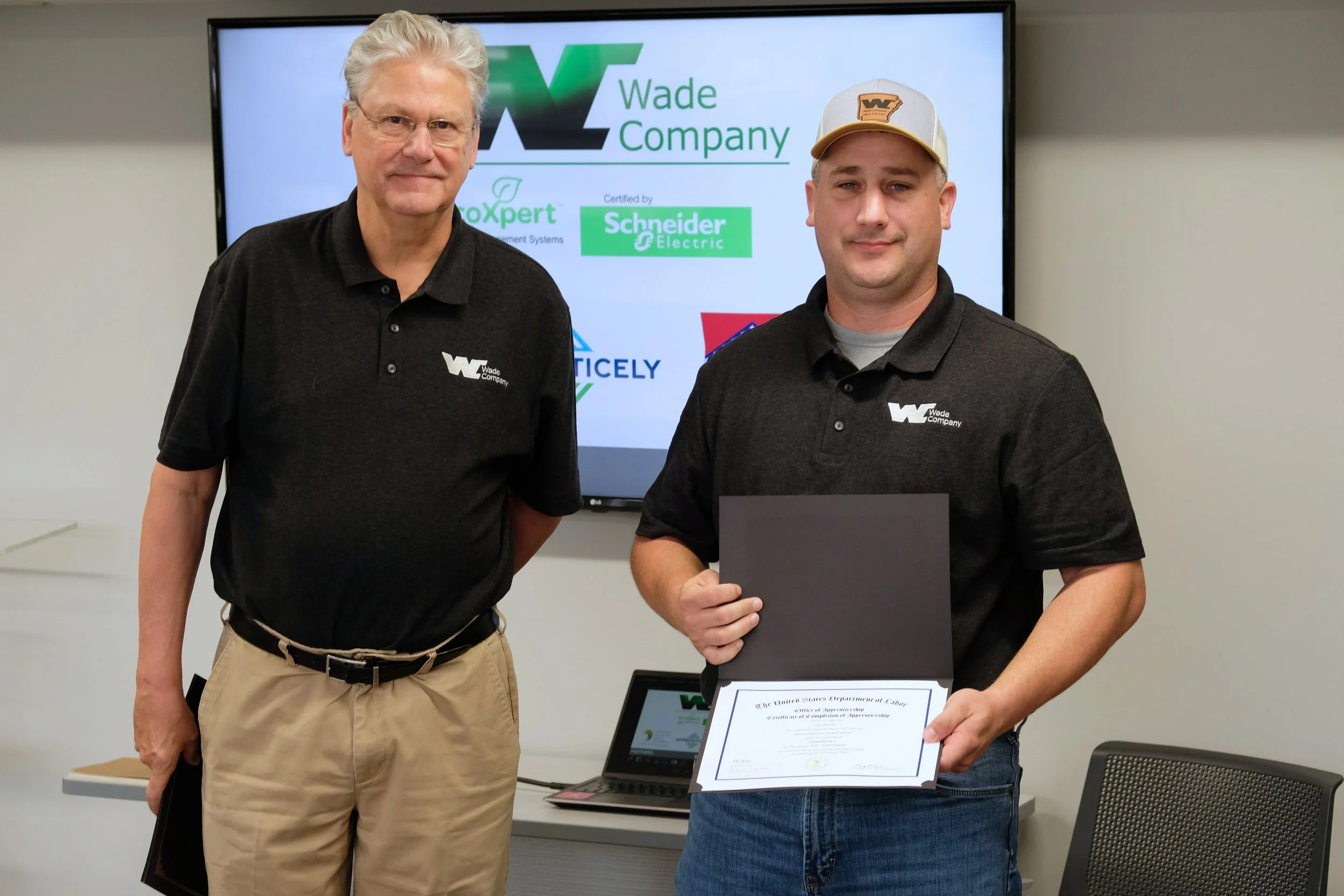
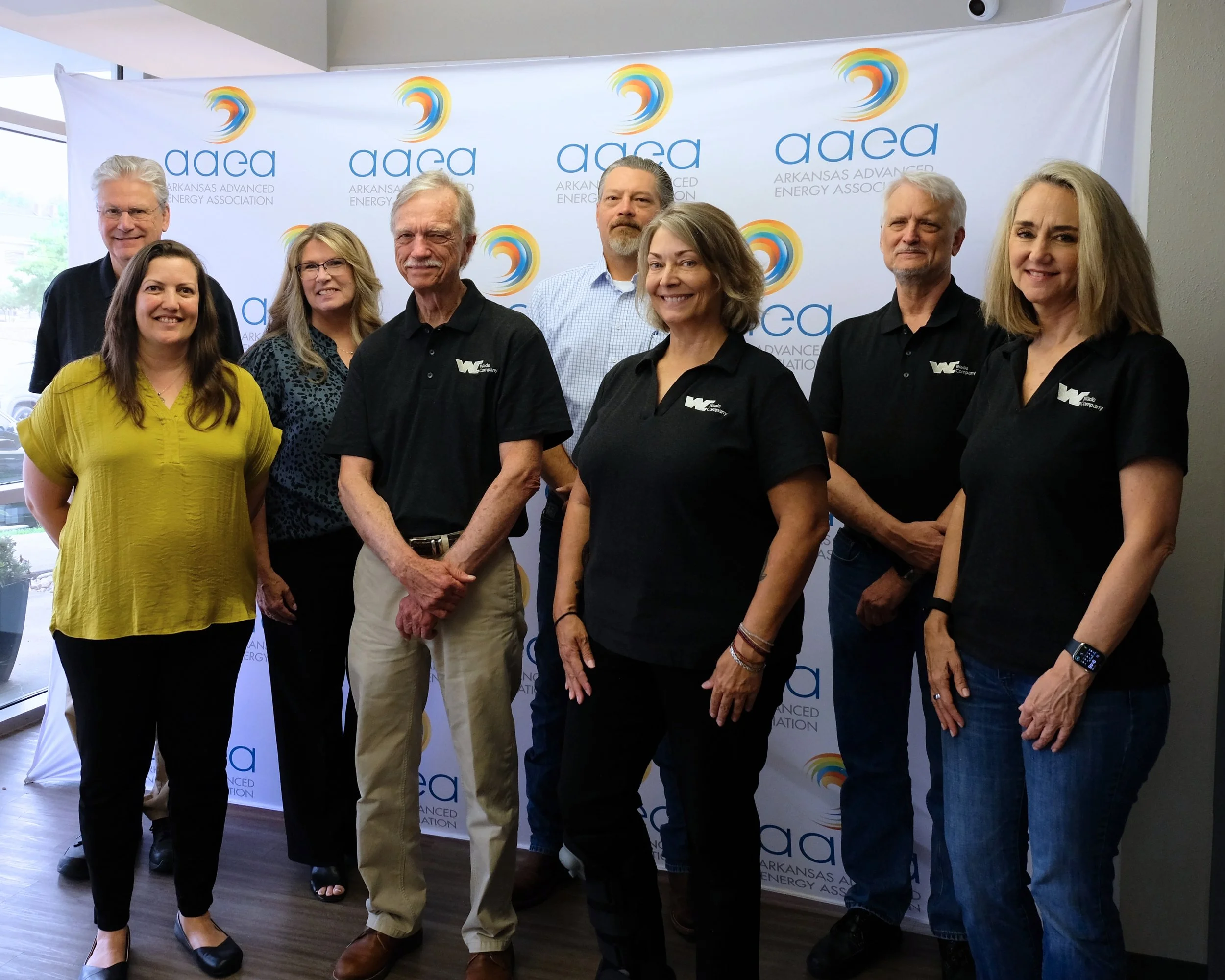
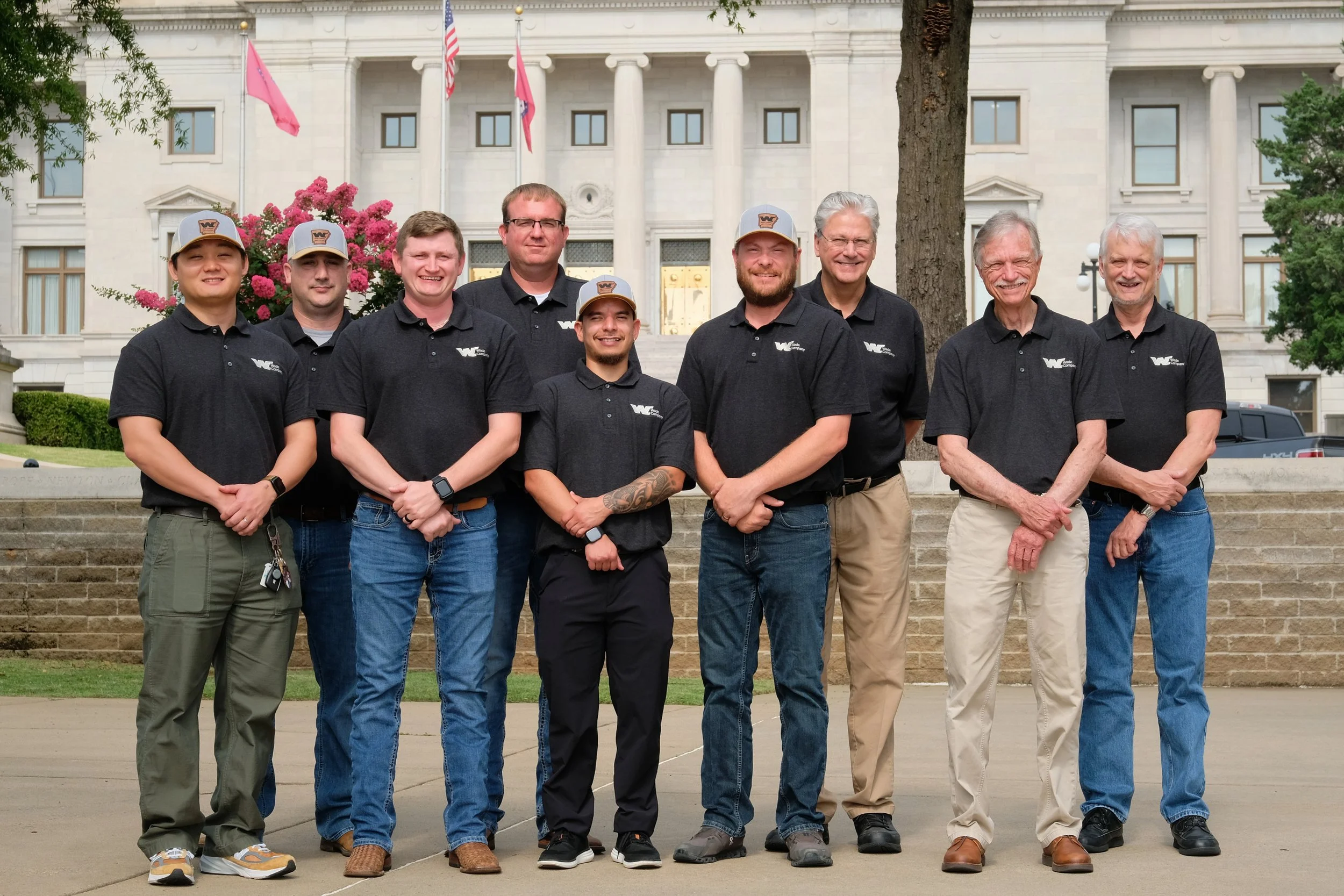
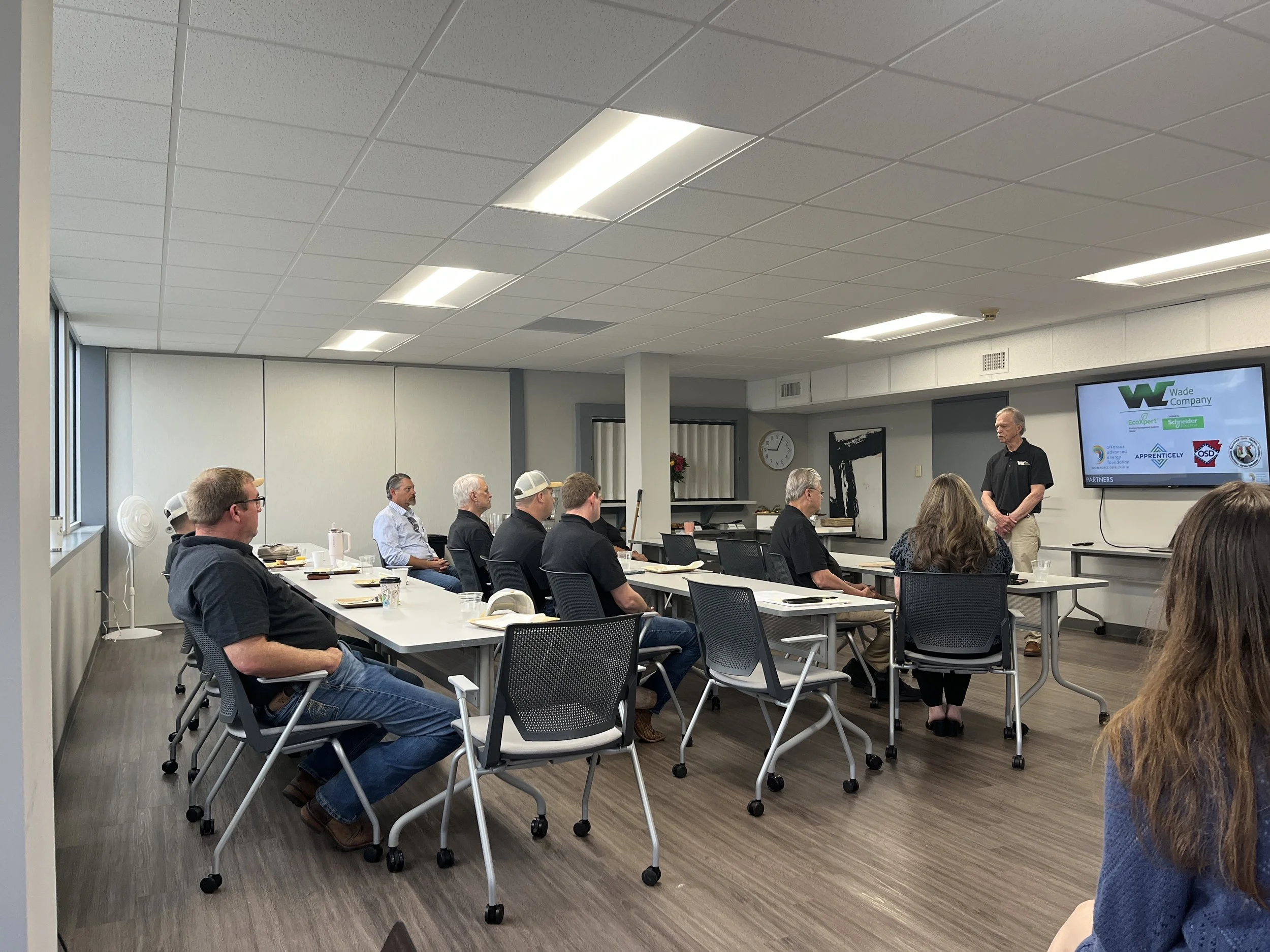
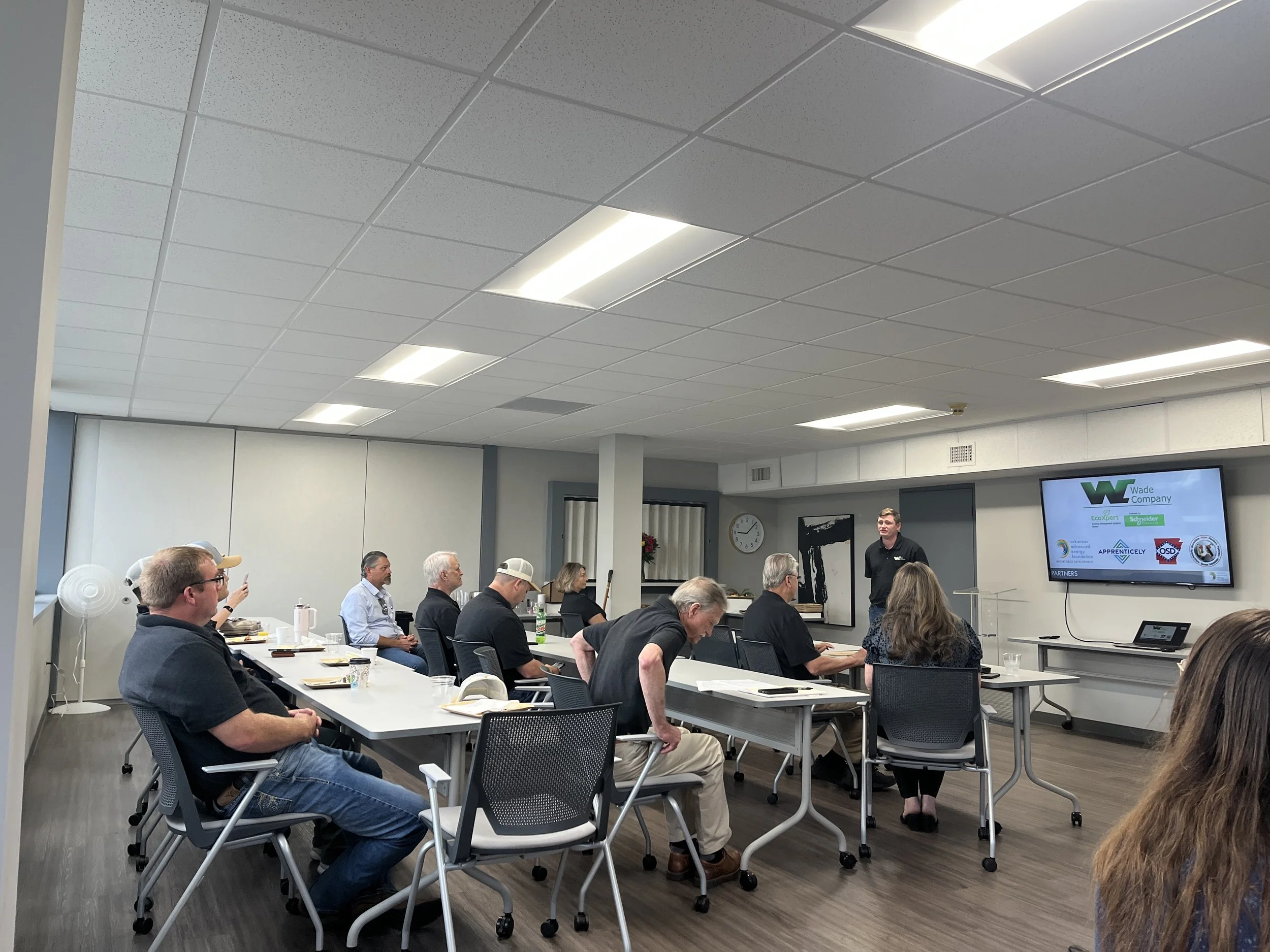
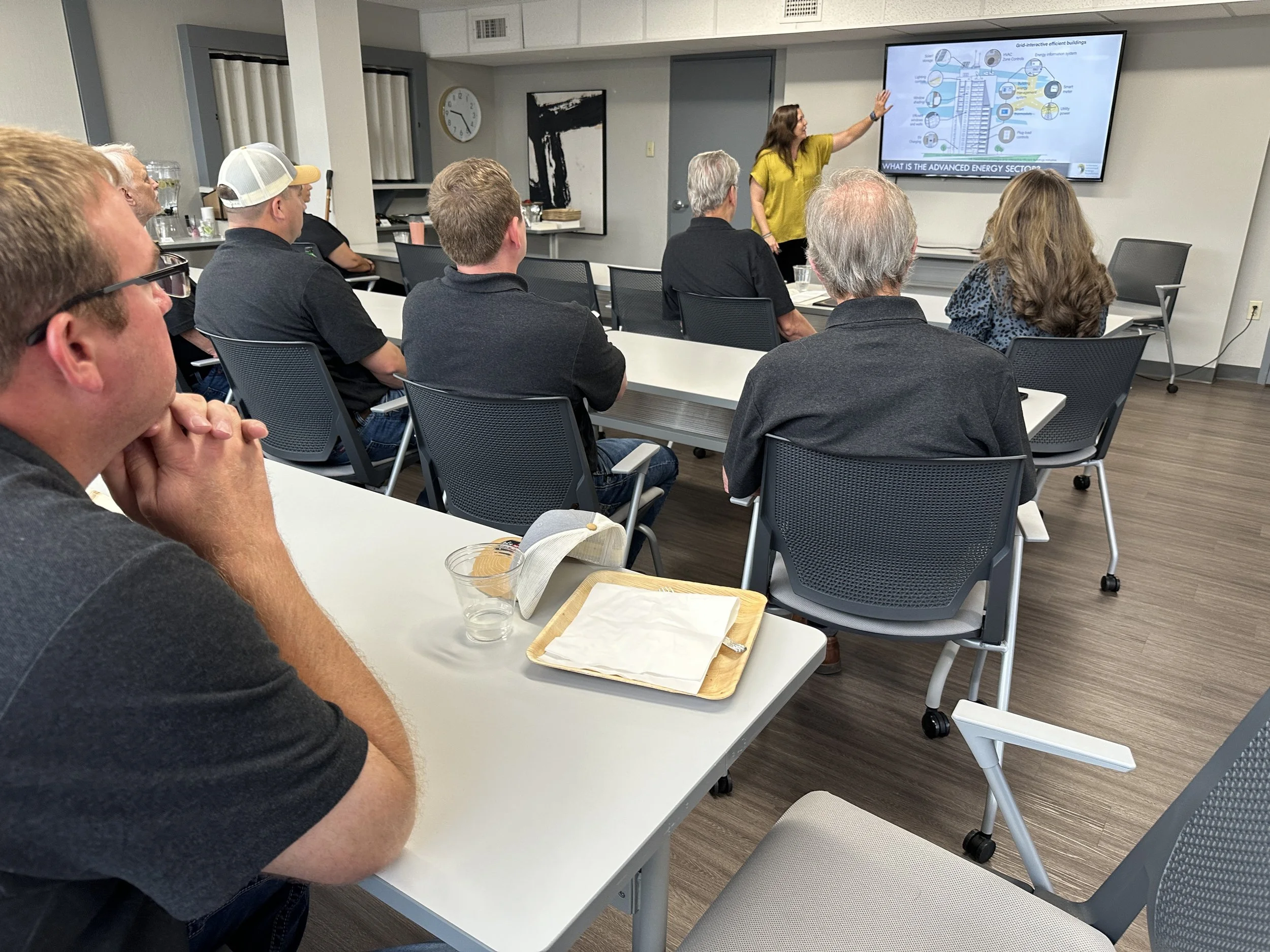
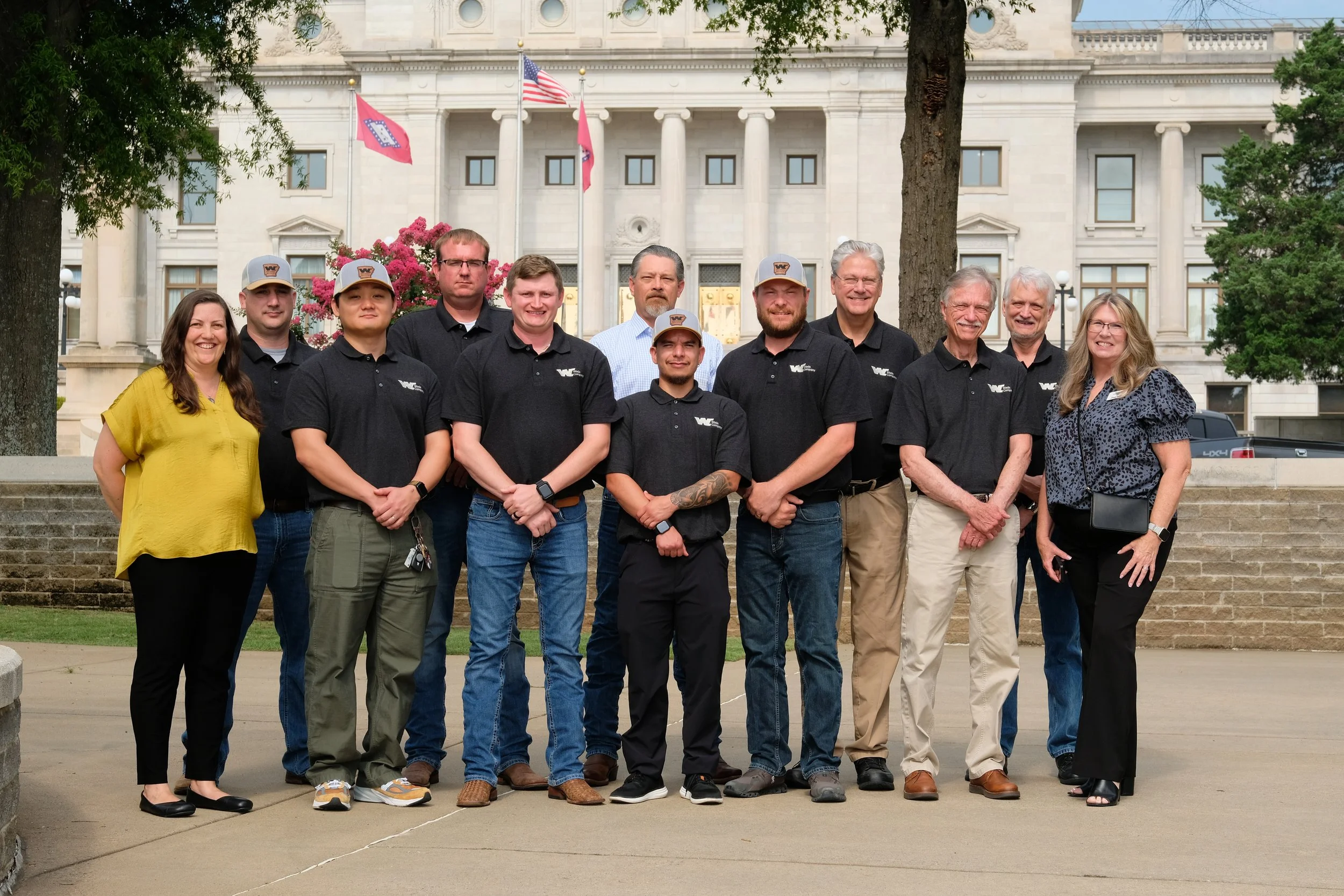
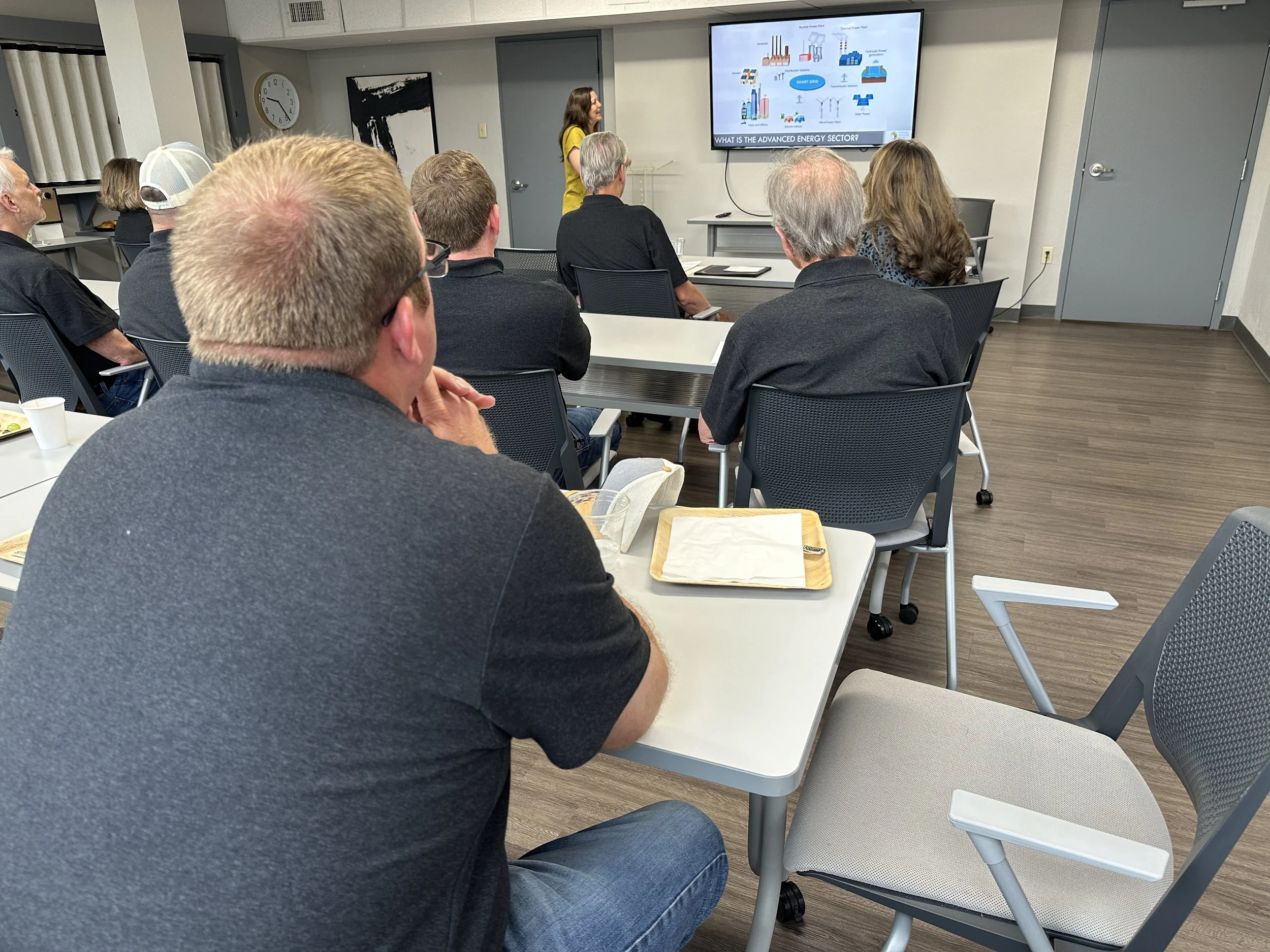
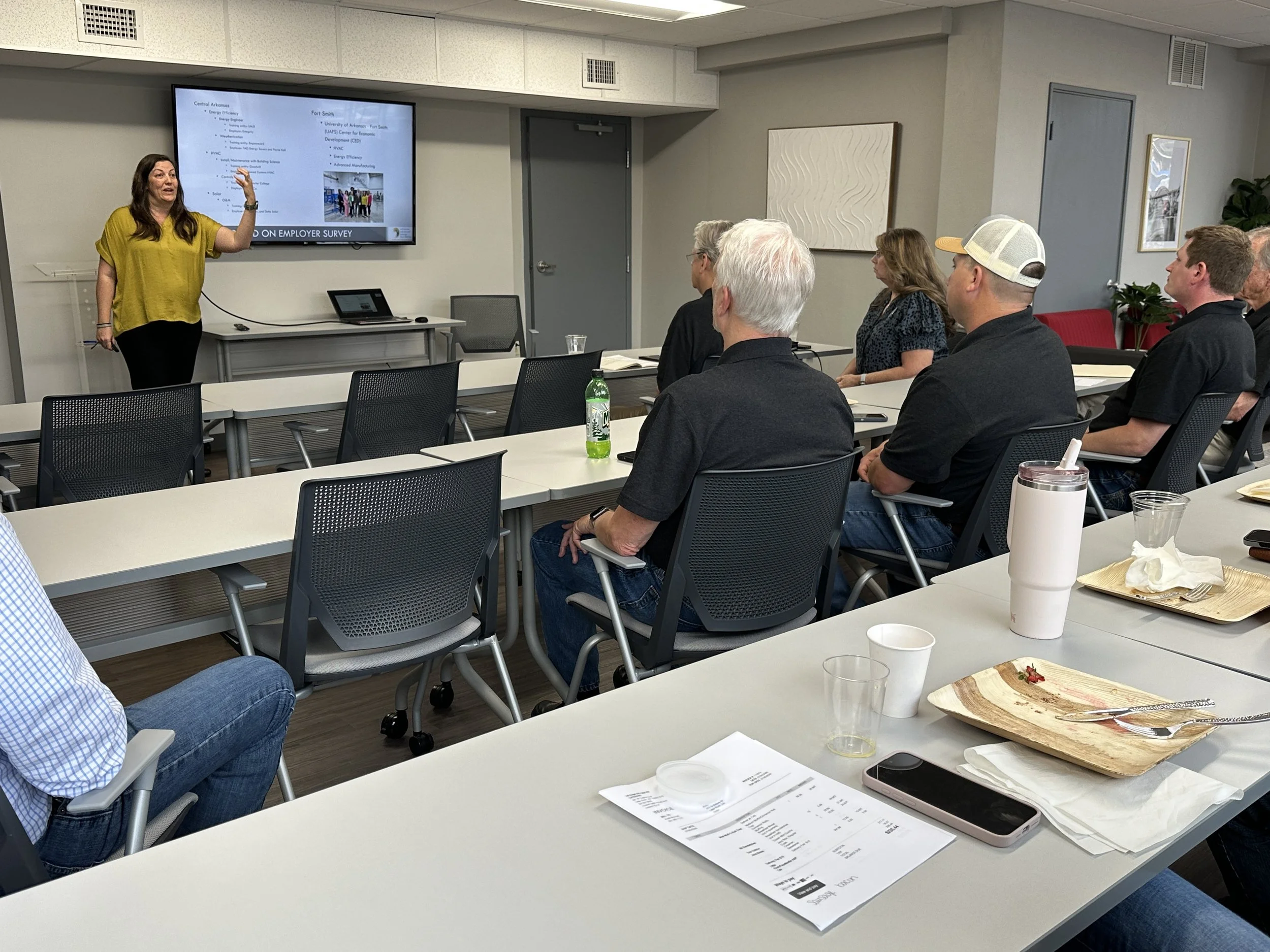

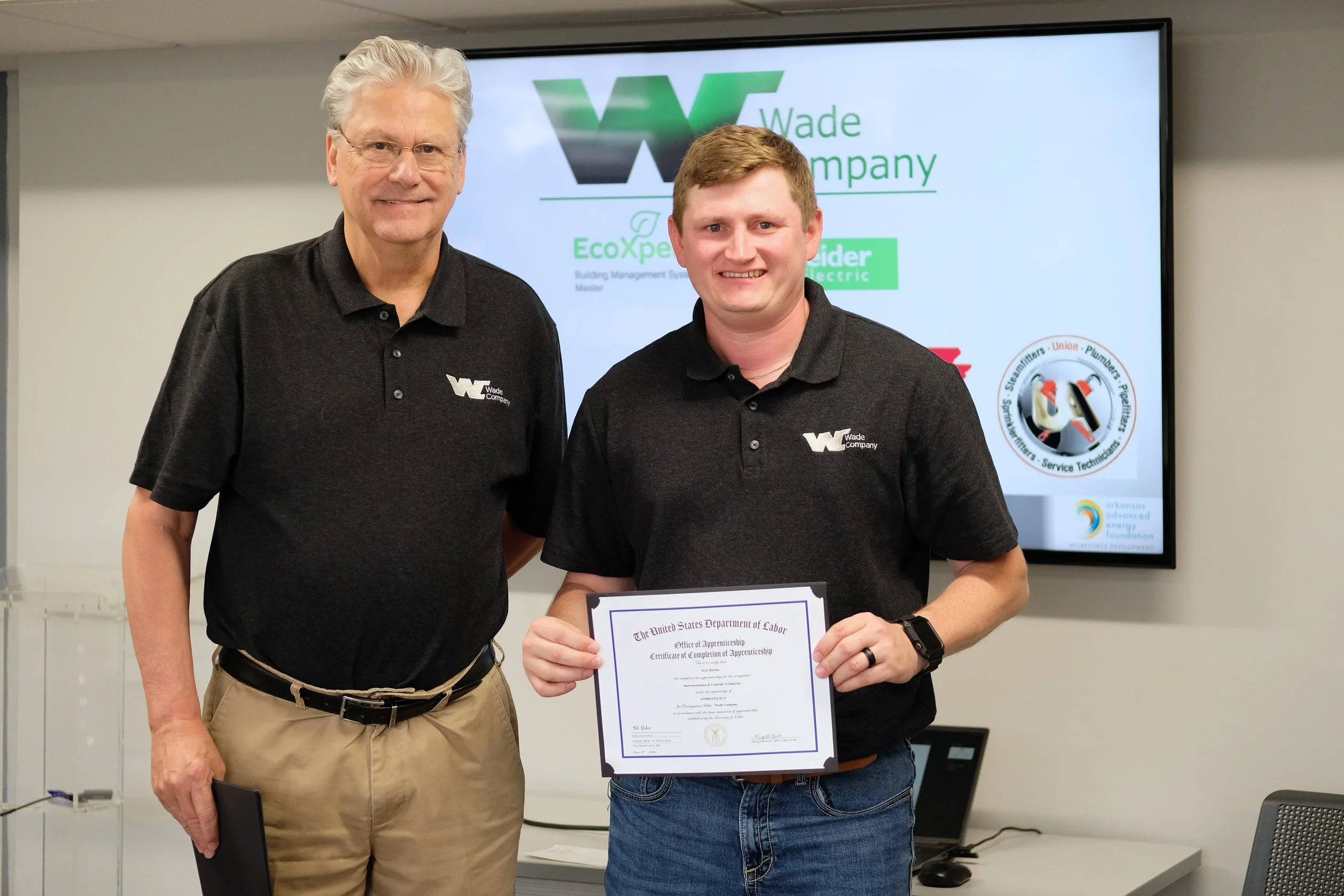
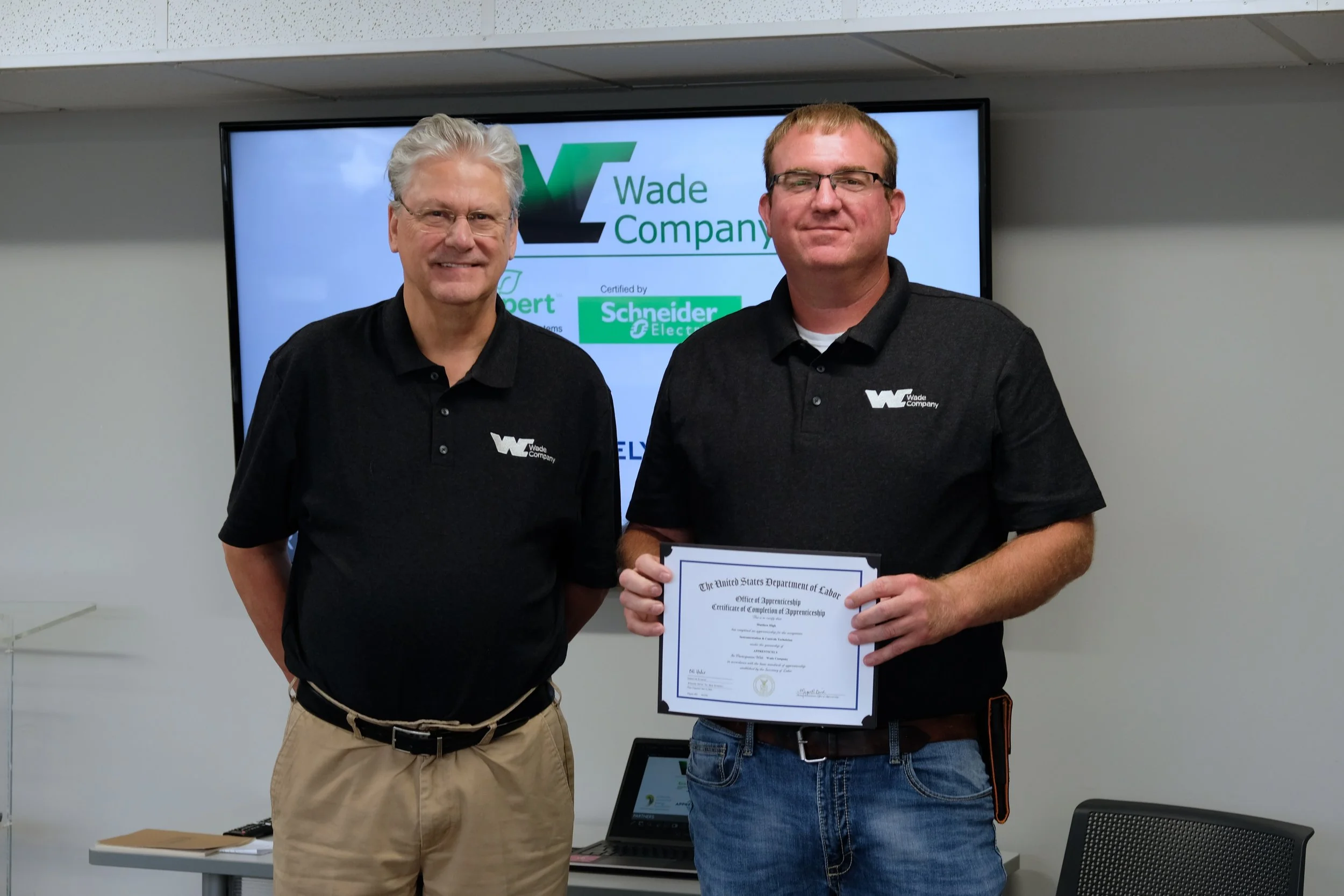
Recognizing that gap, Wade Company partnered with AAEF, the local UA, Apprenticely, and other workforce partners to create a new 2.5-year Instrumentation and Controls Technician Registered Apprenticeship, a training model specifically designed around modern building controls technology.
“Apprenticeships have always proven to be the top producers of tradespeople,“ said Travis Allen, Business Agent at UA Local 155. “Combining classroom technical learning and proficiency testing with real-world hands-on training produces safe, knowledgeable, deliberate workers prepared for the challenges of the field - and reduces student debt.”
“When Wade Company saw a need for training innovation in their highly technical, quickly evolving market, they found a path and the entire Wade Company took that path together,” Allen continued. “I believe it has made all the difference. They arrived at the end of that path with something truly unique and useful. Their partnership with AAEF has produced a thoughtful and well-executed example of what is possible in apprenticeships.”
For Wade Company, creating that pathway also required a significant financial commitment.
“The cost of training limits what we can take on and maintain our business,” Brown said.
The total cost for the six apprentices to complete the program, including courses, travel to the trainings, materials, credentialling fees, and other expenses, was approximately $100,000. Grants from the Arkansas Office of Skills Development, ACE Network, IREC, and Jobs for the Future, covered $44,000, with Wade Company investing the remaining $56,000 in its employees and the future of the HVAC and building controls industry.
Apprenticeships like Wade Company’s also addresses a broader workforce challenge: creating recognized pathways for occupations that are increasingly in demand in Arkansas.
“AAEF is proud to serve as the industry navigator bringing the right partners to the table,” said April Ambrose, Director of Workforce Development for AAEF. “Arkansas is at a pivotal moment as energy demand and advanced energy industries grow, driving the need for skilled workers in electrification, grid modernization, advanced manufacturing, and energy efficiency. Arkansas ranks fourth nationally for demand for skilled craft labor; simultaneously, Arkansas energy employers report difficulty finding qualified talent. Expanding proven workforce solutions that connect individuals to high-demand careers is essential to powering Arkansas’s economic and energy future.”
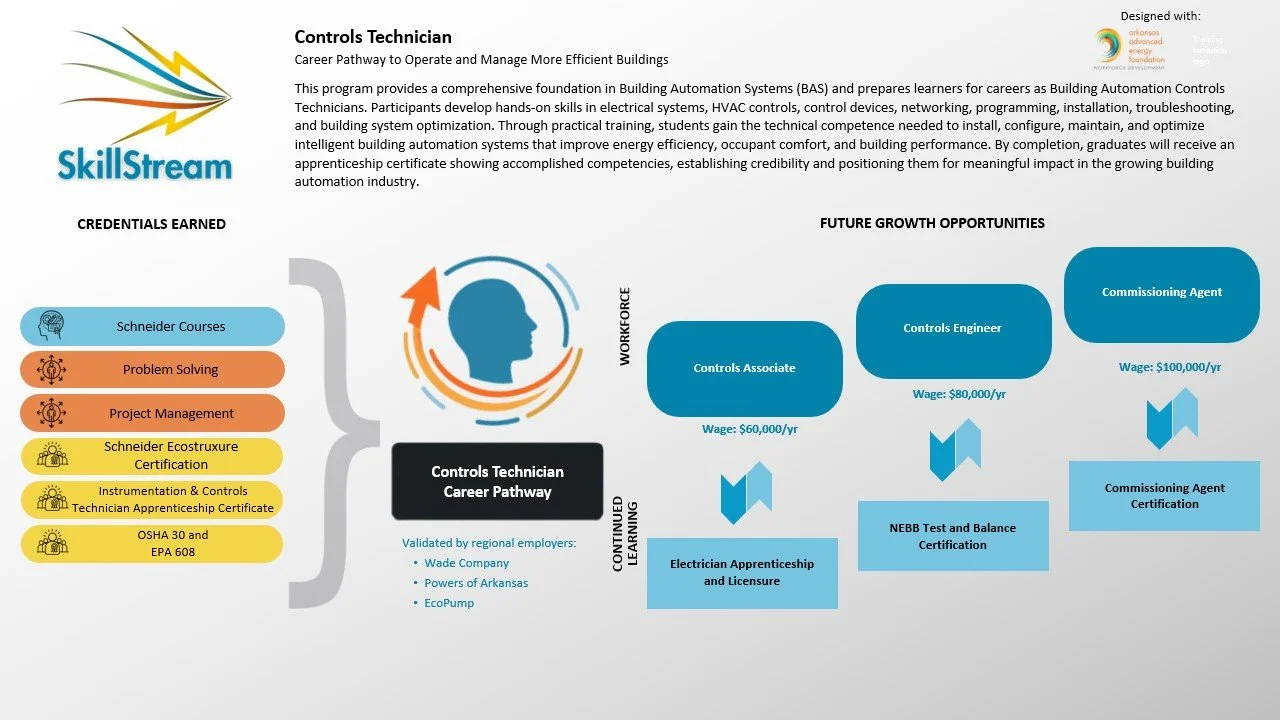
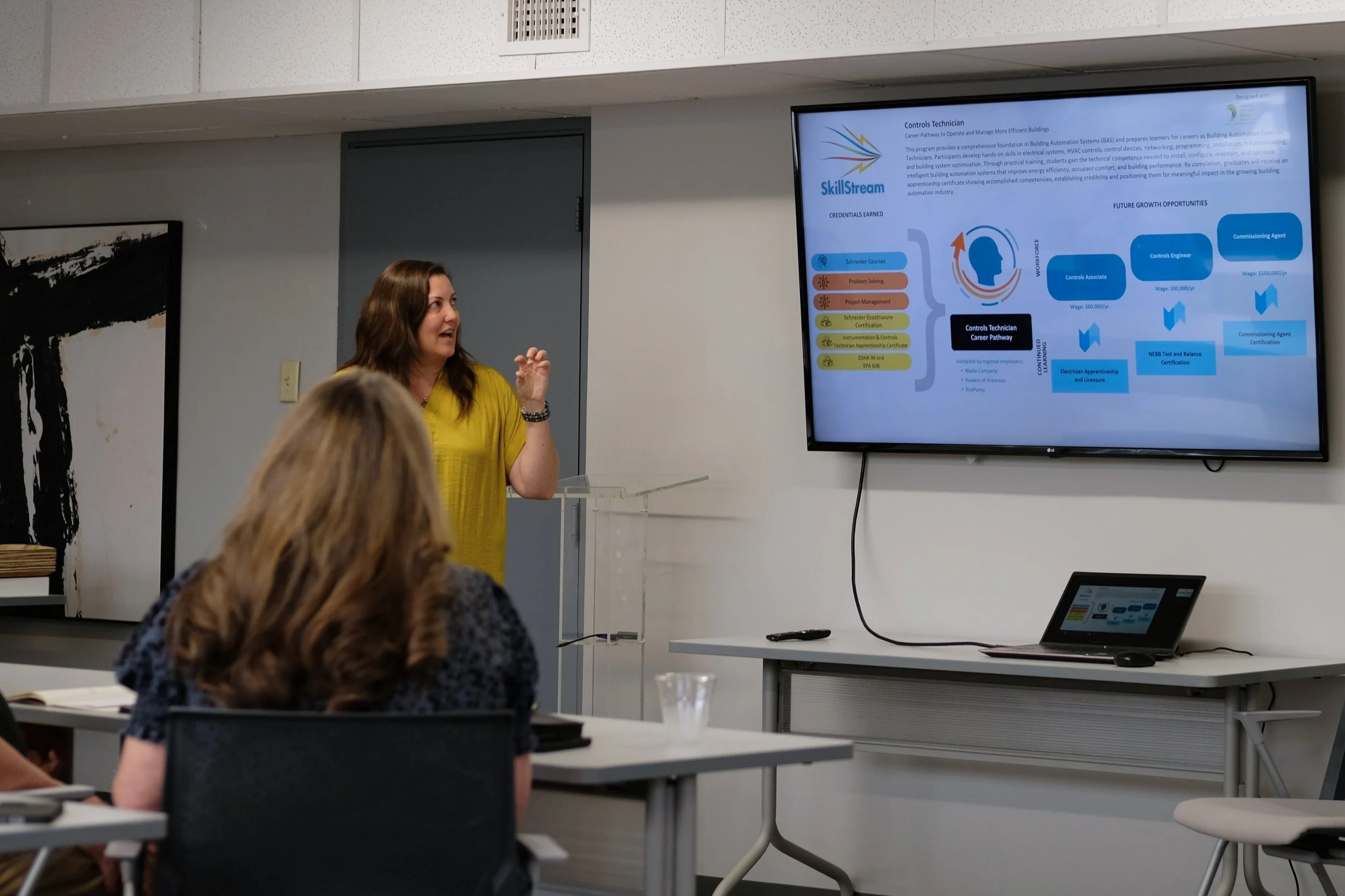
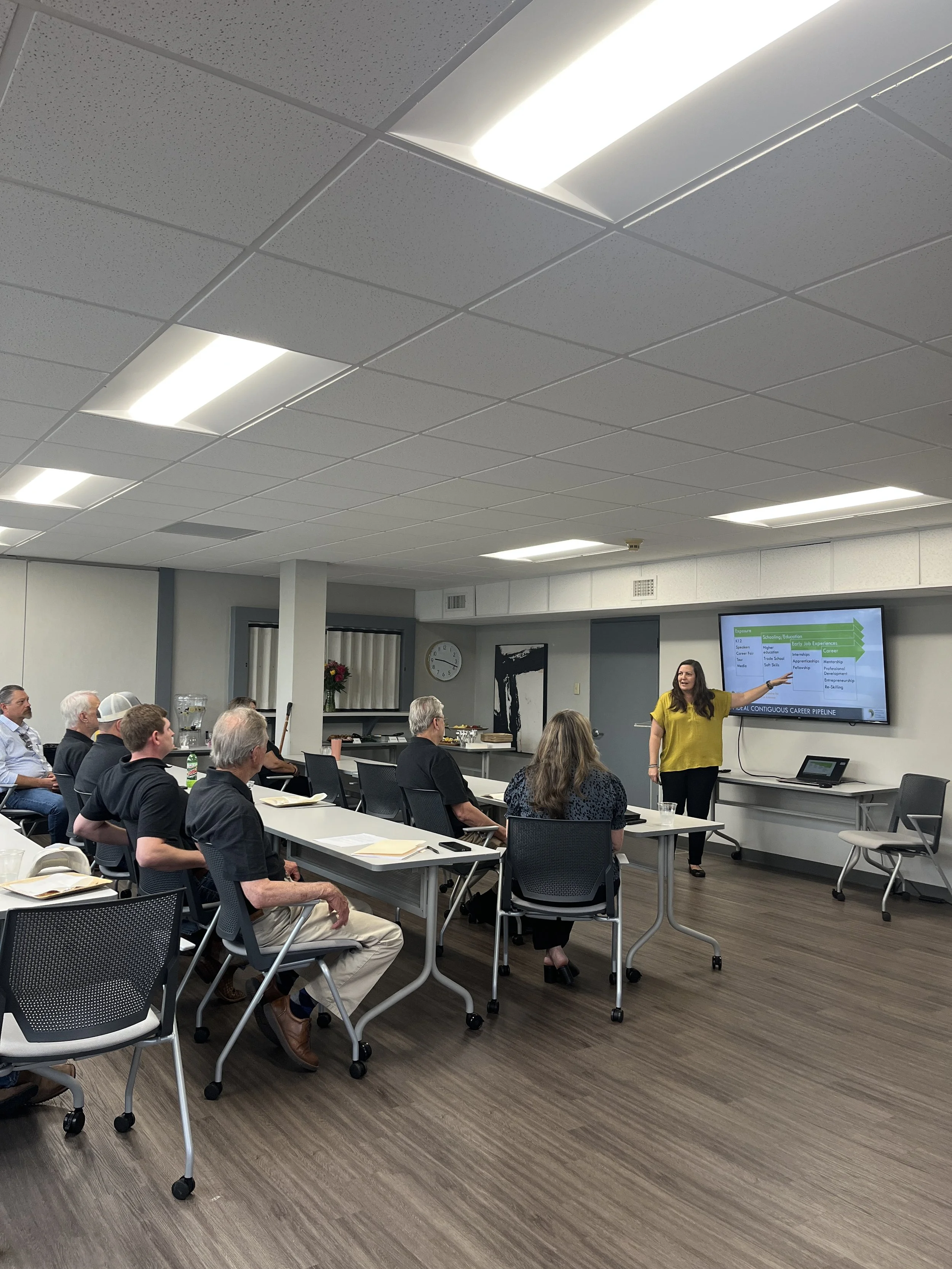
Example of an apprenticeship pathway as part of AAEF’s SkillStream model
“For the individual apprentice, it provides an opportunity to earn a good living while developing valuable technical skills and recognized credentials,” Ritchie said. “For our industry, it helps address the shortage of qualified controls technicians and creates a model that other contractors can use to develop their own workforce. I believe programs like this are essential if we want to continue growing the skilled trades and provide career opportunities for people throughout Arkansas.”
Jenny Sales, Senior Career Coach and Talent Recruiter at Apprenticely, commended the graduates during the ceremony: “We’re proud of everyone on the team and the work they did to meet the apprenticeship completion requirements. This is just the beginning. The demand for qualified control technicians is growing, and the opportunities ahead are vast. We are incredibly proud of your success and look forward to the impact you will continue to make.”
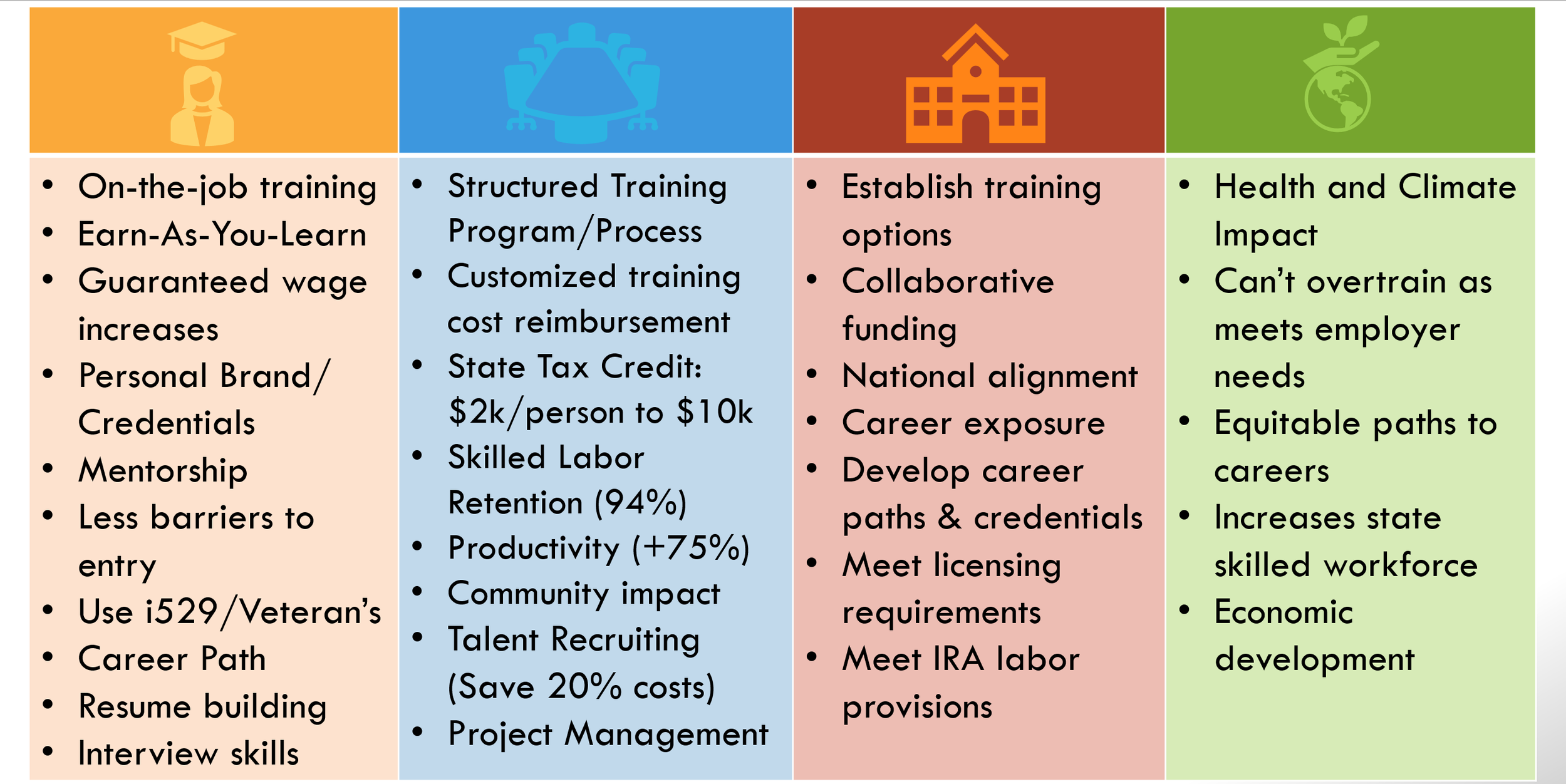
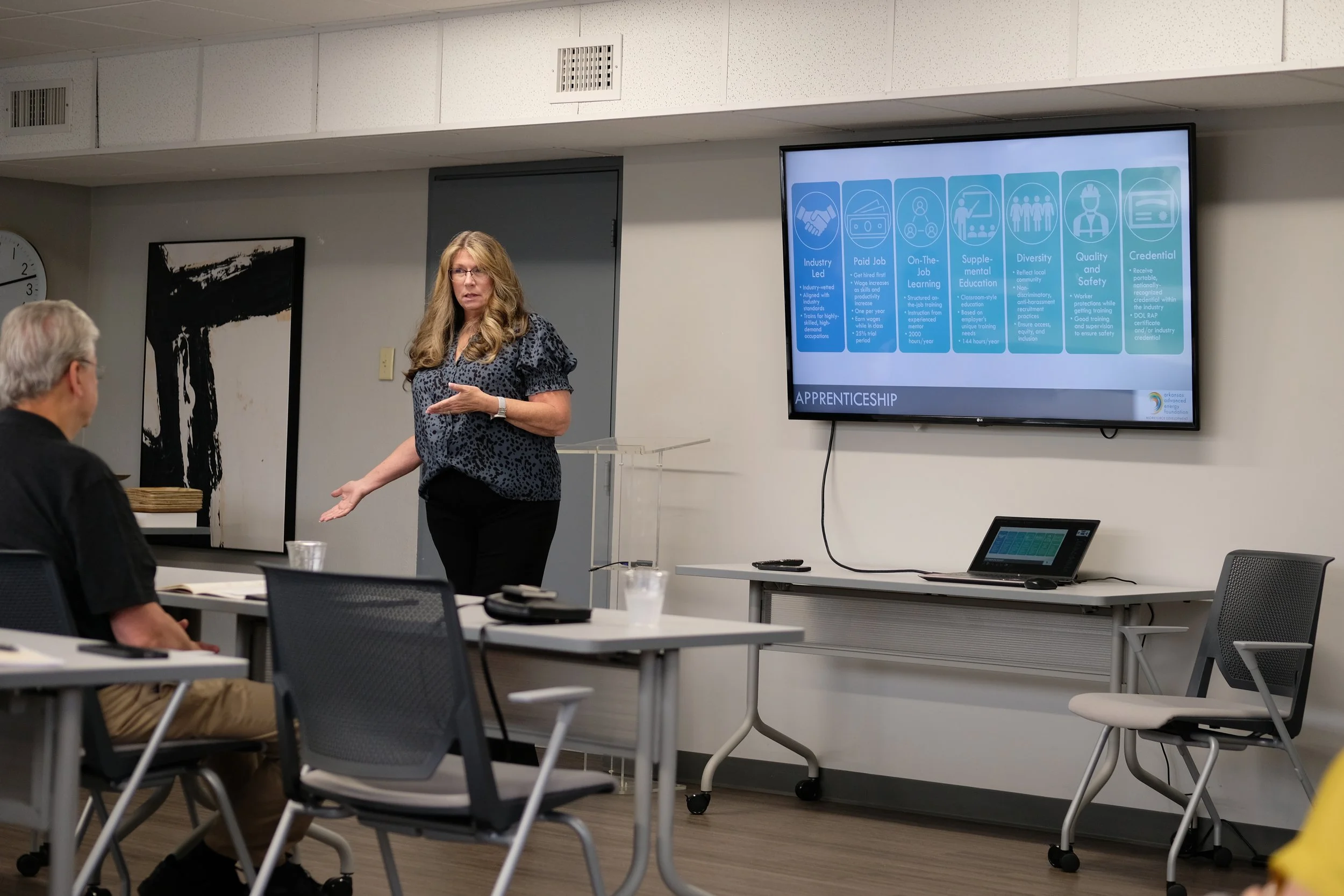
Benefits from apprenticeship programs; some benefits are unique to Apprenticely