

Educational Energy Video Gallery
Related Video Content from our Partners
Featured


Solar photovoltaic (PV) systems can generate clean, cost-effective power anywhere the sun shines. This video shows how a PV panel converts the energy of the sun into renewable electricity to power homes and businesses.

Advanced SMRs offer many advantages, such as relatively small size, reduced capital investment, ability to be sited in locations not possible for larger nuclear plants, and provisions for incremental power additions. SMRs also offer distinct safeguards, security and nonproliferation advantages.

Daylighting—the use of windows or skylights for natural lighting and temperature regulation—is one building strategy that can save money for homeowners and businesses. Highly efficient, strategically placed windows maximize the use of natural daylight in a building, lowering the need for artificial lighting without causing heating or cooling problems.

All of the energy we produce comes from basic chemical and physical processes. That’s mostly been accomplished throughout history by burning carbon-based material like wood, coal and gas—or by harnessing power from the sun, wind, and water. Fission and fusion are two physical processes that produce massive amounts of energy from atoms. They yield millions of times more energy than other sources through nuclear reactions. Fission occurs when a neutron slams into a larger atom, forcing it to excite and spilt into two smaller atoms—also known as fission products. Additional neutrons are also released that can initiate a chain reaction. Fusion occurs when two atoms slam together to form a heavier atom, like when two hydrogen atoms fuse to form one helium atom. This is the same process that powers the sun and creates huge amounts of energy—several times greater than fission. It also doesn’t produce highly radioactive fission products.

This edition of Energy 101 takes a look at how switching to a cool roof can save you money and benefit the environment.

Learn how hydropower captures energy from moving water and turns it into electricity for our homes and businesses.

Data centers provide mission-critical computing functions vital to the daily operation of top U.S. economic, scientific, and technological organizations. These data centers consume large amounts of energy to run and maintain their computer systems, servers, and associated high-performance components—up to 3% of all U.S. electricity powers data centers. And as more information comes online, data centers will consume even more energy. Data centers can become more energy efficient by incorporating features like power-saving "stand-by" modes, energy monitoring software, and efficient cooling systems instead of energy-intensive air conditioners. These and other efficiency improvements to data centers can produce significant energy savings, reduce the load on the electric grid, and help protect the nation by increasing the reliability of critical computer operations.
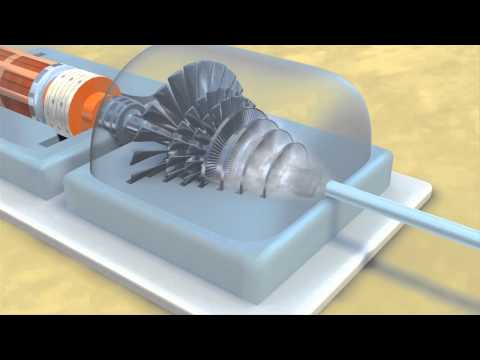
See how we can generate clean, renewable energy from hot water sources deep beneath the Earth's surface. The video highlights the basic principles at work in geothermal energy production, and illustrates three different ways the Earth's heat can be converted into electricity.
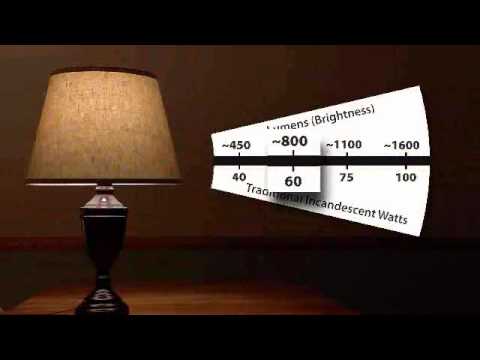
In this edition of Energy 101, we talk about Lumens. When you're shopping for light bulbs, compare lumens to be sure you're getting the amount of light, or level of brightness, you want.
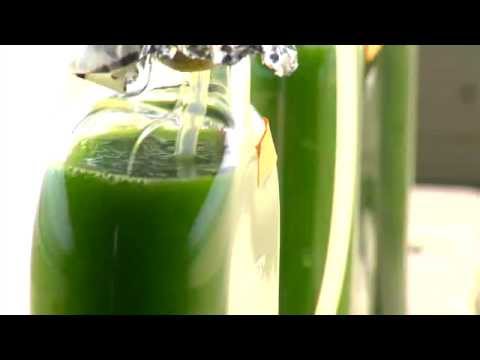
As America takes steps to improve our energy security, home-grown fuel sources are more important that ever. One of the fuel sources of the future is algae, small aquatic organisms that convert sunlight into energy and store it in the form of oil. Scientists and engineers at the Energy Department and its national laboratories are researching the best strains of algae and developing the most efficient farming practices. This edition of Energy 101 shows how oil is extracted from algae and refined into sustainable biofuels.

See how marine and hydrokinetic technologies harness the energy of the ocean's waves, tides, and currents and convert it into electricity to power our homes, buildings and cities.

See how organic materials like corn stover, wheat straw, and woody plants are being used to create homegrown biofuels in the United States—all while reducing our dependence on foreign oil and creating jobs in rural America.

Although Class 8 Trucks only make up 4% of the vehicles on the road, they use about 20% of the nation's transportation fuel. In this video, learn how new fuel-efficient technologies are making our country's big rigs quieter, less polluting, more energy-efficient, and less expensive to operate over time.

You may already know that public transportation reduces pollution and eases congestion on the road. However, many transit fleets are switching over to cleaner, alternative fuels and technologies, making this mode of transportation even more sustainable. Watch this video for examples of these clean fleets, in our busy urban centers and our peaceful national parks.
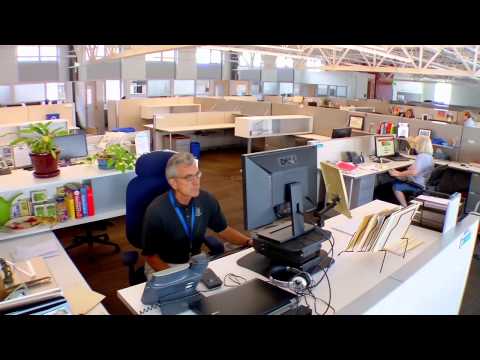
Learn how commercial buildings can incorporate whole-building design to save energy and money while enhancing performance and comfort. This video highlights several energy-saving features of the Research Support Facility at the Energy Department's National Renewable Energy Laboratory—a model for high-performance office building design.

Learn how fuel cell technology generates clean electricity from hydrogen to power our buildings and transportation—while emitting nothing but water. This video illustrates the fundamentals of fuel cell technology and its potential to supply our homes, offices, industries, and vehicles with sustainable, reliable energy.

See how wind turbines generate clean electricity from the power of the wind. Highlighted are the various parts and mechanisms of a modern wind turbine.

Biomass is an organic renewable energy source that includes materials such as agriculture and forest residues, energy crops, and algae. Scientists and engineers at the U.S. Department of Energy and its national laboratories are finding new, more efficient ways to convert biomass into biofuels that can take the place of conventional fuels like gasoline, diesel, and jet fuel. This edition of Energy 101 shows how biomass is broken down and refined into sustainable biofuels via biochemical and thermochemical processes.

Most of us have a basic understanding of manufacturing. It's how we convert raw materials, components, and parts into finished goods that meet our essential needs and make our lives easier. But what about clean energy manufacturing? Clean energy and advanced manufacturing have the potential to rejuvenate the U.S. manufacturing industry and open pathways to increased American competitiveness. Watch this video to learn more about this exciting movement and to see some of these innovations in action.

The following edit was recommended by DOE's Office of Energy Efficiency and Renewable Energy's Geothermal Technologies Office: At :58, “During the winter, the air is usually cooler than the temperature below ground. The solution circulates in a loop underground and absorbs the Earth's heat. This heat is brought to the surface and transferred to a heat pump. T̶h̶e̶ ̶h̶e̶a̶t̶ ̶p̶u̶m̶p̶ ̶w̶a̶r̶m̶s̶ ̶t̶h̶e̶ ̶a̶i̶r̶ ̶a̶n̶d̶ ̶y̶o̶u̶r̶ ̶r̶e̶g̶u̶l̶a̶r̶ ̶h̶e̶a̶t̶i̶n̶g̶ ̶s̶y̶s̶t̶e̶m̶ ̶w̶a̶r̶m̶s̶ ̶t̶h̶e̶ ̶a̶i̶r̶ ̶s̶o̶m̶e̶ ̶m̶o̶r̶e̶ ̶t̶o̶ ̶a̶ ̶c̶o̶m̶f̶o̶r̶t̶a̶b̶l̶e̶ ̶t̶e̶m̶p̶e̶r̶a̶t̶u̶r̶e̶.̶ ̶F̶i̶n̶a̶l̶l̶y̶ Ducts circulate the air to the various rooms.” --- An energy-efficient heating and cooling alternative, the geothermal heat pump system moves heat from the ground to a building (or from a building to the ground) through a series of flexible pipe "loops" containing water.
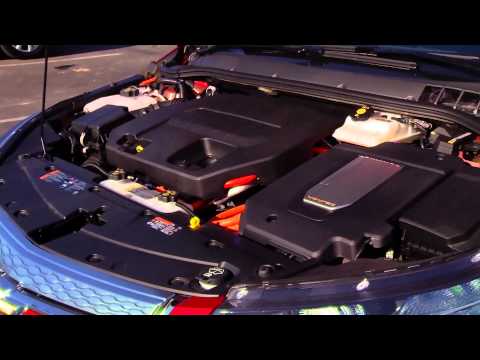
This edition of Energy 101 highlights the benefits of electric vehicles, including improved fuel efficiency, reduced emissions, and lower maintenance costs.
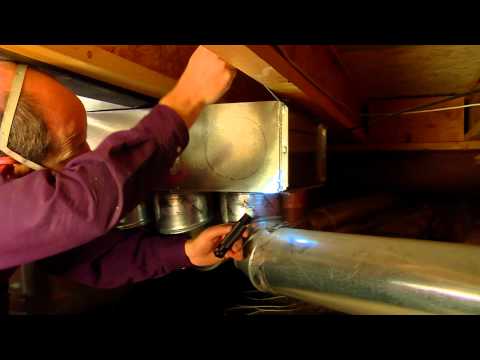
A home energy checkup helps owners determine where their house is losing energy and money - and how such problems can be corrected to make the home more energy efficient. A professional technician - often called an energy auditor - can give your home a checkup. You can also do some of the steps yourself. Items shown here include checking for leaks, examining insulation, inspecting the furnace and ductwork, performing a blower door test and using an infrared camera.

From towers to dishes to linear mirrors to troughs, concentrating solar power (CSP) technologies reflect and collect solar heat to generate electricity. A single CSP plant can generate enough power for about 90,000 homes. This video explains what CSP is, how it works, and how systems like parabolic troughs produce renewable power.